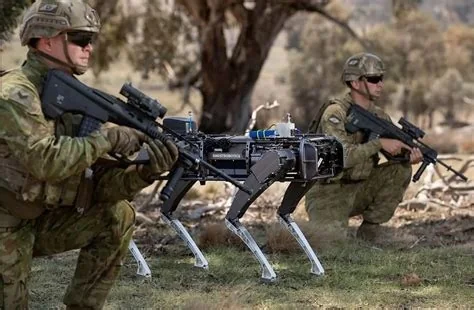
Israel has officially deployed advanced AI systems known as Lavender and Gospel to hunt high-value Iranian targets. This shift marks a defining moment in modern conflict where algorithms now handle lethal decisions at industrial speeds. Instead of manual processing, these tools identify and prioritize hundreds of targets simultaneously, fundamentally changing how military operations execute precision strikes against enemy leadership and infrastructure.
The New Era of Algorithmic Warfare
The lines between Silicon Valley and the battlefield have officially blurred. Recent conflicts have evolved into what experts call the “first AI war,” where algorithms make life-or-death decisions faster than any human team could manage. It isn’t just about drones firing missiles anymore; it’s about code directing the entire kill chain.
While American forces focused on broader strategic targets like missile batteries, Israel took the lead on hunting down specific leadership figures. This division of labor highlights a clear strategy: the U.S. handles heavy infrastructure, while Israel deploys specialized AI to go after the people. The result is a surgical approach that relies on data rather than just firepower.
Lavender and Gospel: How They Work
What powers this terrifying precision? The answer lies in two specific systems reportedly deployed by the Israeli military. These algorithms are designed to identify targets with chilling efficiency. More alarmingly, they are programmed to accept up to 100 targets simultaneously, turning targeted killings into an industrial-scale process enabled by code.
The speed of these operations is staggering. Human analysts simply cannot process the volume of data required to verify and strike hundreds of targets in real-time. The AI systems do it for them. Space-based sensors feed data into the AI, which then cross-references it with intelligence databases to flag high-value targets instantly. This efficiency creates a kill chain that moves faster than any traditional command structure could react.
A Calculated Strategy
Yet, the strategy isn’t just about immediate destruction. There’s a calculated patience to it, too. Reports suggest Israel kept certain leaders alive for a time, using them as leverage while dismantling the rest of the infrastructure. The logic wasn’t hesitation but a strategic choice to leave them alive for talks while the pounding of targets continued with a laser focus on missile and drone launchers.
This approach reshapes the very definition of modern warfare. The side with the superior algorithm wins. It’s not just about having more missiles; it’s about knowing exactly where to aim them with zero delay.
The Role of Commercial Technology
The role of Silicon Valley in this equation is impossible to ignore. The technology used isn’t just military-grade proprietary code; it’s often adapted from commercial software designed for surveillance and data analysis. This raises a massive question for the tech industry: when does a tool for data processing become a tool for assassination?
If you write the code for Lavender, you are on the front lines. If you build the sensor for the AI, you are part of the kill chain. The separation between the developer and the soldier is gone. Military commanders are no longer just strategists; they are now system architects building the logic that determines who lives and who dies.
Global Implications and Future Risks
The implications extend far beyond the Middle East. If this model works in Iran, every nation will be racing to adopt similar technologies. The barrier to entry for conducting high-precision warfare just dropped to near zero.
You have to wonder how long it will take for the world to fully grasp the implications of this shift. We are watching the birth of a new kind of conflict where the only limit is the processing power of the server farm. The data suggests we are already here. The algorithms are running, the targets are locked, and the war is on.