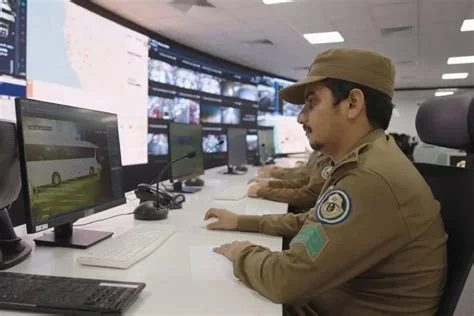
It’s easy to forget, when you’re navigating the crush of the Grand Mosque, that there’s a whole world of digital warfare happening behind the scenes. We often take the smooth flow of digital services for granted, but it’s a feat of engineering. In Madinah, the Electronic Transactions and Commerce Commission (elcom, or ELM) has been quietly building a digital fortress for the millions of pilgrims who converge on the Kingdom each year.
ELM recently took the stage at the 2026 Umrah and Ziyarah Forum to show off exactly what that looks like. The event, held at the King Salman International Convention Center, wasn’t just a meet-and-greet. It was a showcase of a massive operational pivot. The forum, now in its third edition, previously drew over 32,000 visitors from 160 countries. If you’re doing the math, that’s a lot of data points to manage, and ELM is right in the middle of it.
They aren’t just selling apps; they’re selling a complete digital ecosystem. The big reveal was “Nusuk AI.” Think of it as a super-smart guide that doesn’t just tell you where to go, but anticipates where you need to be. It’s paired with “Nusuk marhaba,” which is being pitched as the first point of welcome in a massive reception ecosystem that spans air, land, and sea ports. That’s a tall order, isn’t it? Managing the logistics of a global influx of travelers requires more than just a map; it requires predictive analytics.
We’ve seen how bad crowd control can turn a spiritual journey into a logistical nightmare. ELM isn’t taking chances. They’ve rolled out a suite of solutions designed to keep the flow smooth, from “Adahi Program” management to the “Muqeem” platform handling Makkah entry permits. They even tackled the Zamzam water issue, integrating those services into the digital fold. It’s all part of a broader push to make the experience seamless, rather than a series of hurdles.
But it’s not just about ease of use. There’s a strategic layer to this, too. ELM is simultaneously advancing “sovereign AI.” That means all model training and data processing stay within Saudi borders. It’s a security imperative. You don’t want foreign servers handling the data of millions of visitors to the holiest sites on Earth. By keeping the infrastructure domestic, they ensure that national information assets remain under strict control.
Of course, you don’t need a degree in computer science to see why this matters. The integration of AI with remote sensing and GIS (Geographic Information Systems) is where the magic happens. This combination allows them to process high-resolution satellite imagery to deliver real-time insights into the Two Holy Mosques. They can spot bottlenecks or safety hazards before a pilgrim even steps onto the pavement. It’s data-driven empathy, really.
Then there’s the “Tawakkalna” application, which has already become a lifeline for millions. Available in seven languages and accessible in 77 countries, it’s the go-to app for permits, weather updates, and Qibla direction. It’s the digital wallet of the pilgrim journey, and it’s just getting started.
This digital transformation aligns perfectly with the Kingdom’s Vision 2030 goals. The objective isn’t just to handle more pilgrims; it’s to elevate the entire religious tourism sector. By weaving AI into every thread of the journey—from the moment you land to the moment you leave—ELM is building a model that other nations are going to be studying for years.
Practitioners Perspective: A Digital Layer Underneath Reality
- “I’ve seen digital transformation fail in big organizations when it’s just slapped on top of legacy processes.” What’s impressive about the ELM approach is that they’re building the digital layer underneath the physical reality. When you walk into a site and your phone tells you exactly how many people are in that specific zone, it’s not magic. It’s real-time, localized intelligence. This is the standard we need to aim for, not just for religious tourism, but for all public services.” — A Senior IT Infrastructure Architect