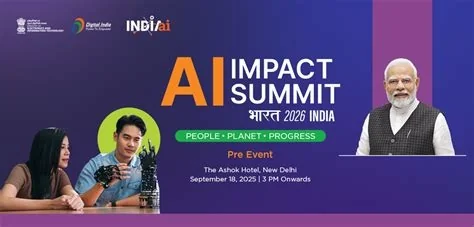
At the recent India AI Impact Summit in New Delhi, more than 50 student teams from Atal Tinkering Labs took center stage, showcasing AI‑driven prototypes that tackle real‑world challenges. Their hands‑on solutions—from smart irrigation to disease‑early‑warning systems—caught the attention of policymakers and investors, proving that youthful ingenuity can accelerate India’s AI agenda. You’ll see why this matters for the next wave of home‑grown tech.
Student Teams and Their Game‑Changing Prototypes
More than fifty teams arrived from university labs across the country, each armed with a prototype that blends low‑cost hardware and AI models. The showcase proved that students aren’t just learning theory—they’re building solutions you can actually deploy.
Smart Irrigation System from LNCT Bhopal
Key impact: a cloud‑hosted prediction engine uses lightweight sensors to forecast crop stress, cutting water use on smallholder farms by up to 30 %. The design aligns with national water‑conservation goals, offering a scalable model for rural agriculture.
AI‑Powered Dengue Early‑Warning Platform
Another team leveraged open‑source health data to flag high‑risk zones before outbreaks peak. Public‑health officials at the summit called the tool potentially valuable for rapid response planning.
Other Notable Projects
- Low‑cost traffic‑flow optimizer that predicts congestion patterns in real time.
- AI‑driven soil‑nutrient analyzer for small farms.
- Community‑focused waste‑sorting assistant that guides proper disposal.
Policy Backing and Structured Support
The Ministry of Education and the Atal Innovation Mission (AIM) deliberately placed student innovation at the heart of the summit. Their push signals a policy shift: India wants the next generation of AI entrepreneurs to start tinkering early, with government backing.
During the event, organizers announced a new “Student Innovation Track” for the upcoming Global INDIAai Summit. The track promises seed funding, mentorship pods, and fast‑track pilot programs with governmental agencies—exactly the support ecosystem students need to move from prototype to market.
Why This Momentum Matters to You
Seeing student prototypes alongside established startups gives you a glimpse of how tomorrow’s AI solutions will be shaped. When policymakers witness a model that predicts crop disease, they can craft regulations that foster responsible AI deployment. For budding innovators, the exposure opens doors to mentorship, funding, and real‑world testing.
Looking Ahead: Scaling Student Innovation
While dozens of prototypes dazzled, many still need scaling resources, robust data‑governance, and market validation. The summit’s commitment to a dedicated track aims to fill those gaps, turning today’s lab experiments into tomorrow’s impact.
In short, the India AI Impact Summit proved that when policy, industry, and youthful curiosity converge, the result is a crucible for socially relevant technology. The real question now is how fast you’ll see these student‑born solutions move from exhibition halls to everyday life.