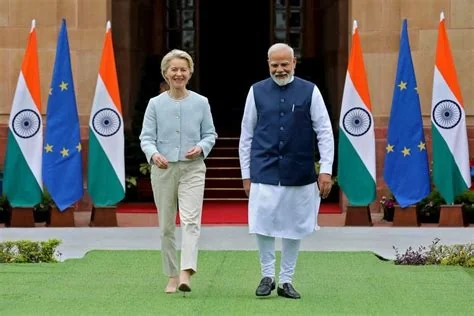
At the AI Impact Summit in New Delhi, European leaders signaled a swift push to ratify the India‑EU Free Trade Agreement while pledging support for India’s booming artificial‑intelligence sector. This move promises reduced tariffs, smoother market entry, and a shared regulatory framework that could reshape tech collaboration across both continents.
Why the EU Is Fast‑Tracking the India‑EU Trade Deal
The summit’s agenda centers on AI, semiconductors, and digital governance, highlighting Europe’s desire to partner with a rapidly expanding AI ecosystem. By aligning with India, the EU aims to influence global AI standards while gaining access to a massive talent pool and innovative startups.
Strategic Benefits for European Companies
- Lower tariffs on high‑tech goods make it cheaper to export semiconductor equipment and cloud services.
- Streamlined customs procedures reduce delays for cross‑border shipments.
- Mutual recognition of standards eases compliance for AI models and digital platforms.
Opportunities for Indian AI Startups
- Access to European R&D funding and joint‑development programs.
- Clear regulatory guidance that mirrors EU’s responsible AI framework.
- Potential partnerships with established European tech firms looking to expand eastward.
What This Means for the Tech Landscape
Companies on both sides can expect smoother market entry and a clearer path to scaling AI solutions. The EU’s AI regulatory model could serve as a template for India’s upcoming AI rules, fostering a responsible ecosystem that balances innovation with consumer protection.
Potential Challenges Ahead
While the momentum is strong, you might wonder whether the European Parliament will move quickly enough to meet India’s expectations. Likewise, India will need to adopt European‑style AI regulations without stifling its home‑grown talent. These questions will shape the next round of negotiations.
Industry Voices on the Fast‑Track Pact
Rajat Sharma, co‑founder of an Indian AI startup, says the EU’s backing “provides a credible pathway to scale globally, letting us design models that meet both markets’ standards.” He adds that early ratification would “unlock funding avenues and joint‑R&D programs that are otherwise hampered by bureaucratic delays.”
A senior EU official notes that “a swift agreement will let us co‑develop AI standards that reflect shared democratic values while leveraging India’s talent pool and data resources.”
Looking Forward
If the dialogue stays constructive, you could see a trans‑continental AI corridor emerge, blending Europe’s regulatory rigor with India’s scale and ingenuity. The partnership promises to accelerate innovation, create jobs, and set new benchmarks for responsible AI worldwide.