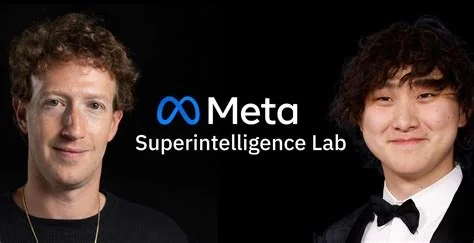
Meta Platforms revealed that its Superintelligence Lab has delivered its first foundational AI models for internal testing, marking a transition from research prototypes to production‑ready systems. The announcement, made by CTO Andrew Bosworth on the opening day of the World Economic Forum in Davos, highlights rapid progress within six months of the lab’s launch and sets the stage for integration into Meta’s consumer products.
What the Superintelligence Lab Delivered
Bosworth confirmed that the lab produced high‑performing models, though specific names and capabilities remain undisclosed. The models are currently undergoing internal evaluation to assess reliability, scalability, and usability before any external rollout.
Post‑Training Engineering as the Next Hurdle
The focus now shifts to extensive post‑training work, including optimization, safety testing, and integration with Meta’s existing infrastructure. Turning research‑grade models into production‑ready systems requires rigorous engineering to ensure they can operate at the scale demanded by Meta’s consumer services.
Strategic Context
Meta’s AI strategy was reinforced in 2025 with a major organizational overhaul that placed artificial intelligence at the core of its long‑term vision. A significant investment in data‑labeling capabilities and a partnership with Scale AI provide the high‑quality training data essential for large‑scale foundation models.
Consumer Hardware Implications
The timing aligns with a strategic shift in Meta’s hardware roadmap, including a pause on the international expansion of Ray‑Ban Display smart glasses due to strong domestic demand. These wearables are expected to serve as a distribution channel for AI‑driven experiences, extending generative capabilities beyond smartphones.
Industry Impact
Delivering internal models within six months positions Meta’s AI lab alongside other major tech firms that maintain in‑house model pipelines. While the models are not yet public, their progression to rigorous engineering validation suggests potential integration into Meta products slated for 2026‑2027, enhancing features such as content recommendation and conversational agents across the company’s app ecosystem.
Cautious Optimism
Bosworth emphasized a realistic, incremental approach, noting that immediate, headline‑grabbing user experiences may be limited. Safety, bias mitigation, and performance consistency remain top priorities as the models move toward production.
Future Outlook
Scaling the internal models to support billions of daily interactions will be the next major challenge. Ongoing infrastructure investments and the Scale AI partnership lay the groundwork for handling large‑scale inference. Industry observers will watch for concrete integration signals, such as beta features in Meta’s apps or AI‑enhanced experiences on its hardware devices.