
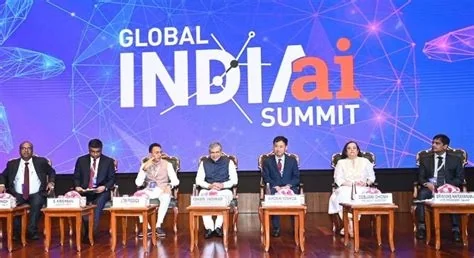
India has just unveiled a $200 billion program to supercharge AI infrastructure, data centers, and talent pipelines across the country. The plan promises affordable, high‑speed compute for businesses, farmers and health workers, while positioning India as the world’s leading AI hub. You’ll see how the funding translates into real‑world projects and what it means for global competition.
Key Pillars of the $200 Billion AI Strategy
Infrastructure Expansion
The government will channel billions into building next‑generation AI hardware, from neural‑network accelerators to edge‑computing nodes in tier‑2 and tier‑3 cities. This push aims to slash latency and make advanced models accessible even on modest smartphones.
Renewable‑Powered Data Centers
New data‑center campuses will run on solar and wind energy, reducing carbon footprints while delivering the massive compute power AI developers need. By pairing green power with high‑density servers, India hopes to keep operating costs low for end users.
Talent Development
More than 1.5 million AI graduates are expected each year, supported by scholarships, reskilling bootcamps, and industry‑led mentorship programs. The goal is to create a pipeline of engineers who can build, deploy, and maintain AI solutions across every sector.
Impact on Indian Industries
Agriculture
Farmers will receive AI‑driven crop‑rotation advice directly on basic phones, helping them boost yields and reduce waste. You can expect smarter pest‑management alerts and weather predictions tailored to local micro‑climates.
Healthcare
AI diagnostics will enable doctors in remote clinics to analyze skin lesions or chest X‑rays with a single image, cutting referral times and improving treatment outcomes.
Small‑and‑Medium Enterprises (SMEs)
Affordable cloud backbones will let SMEs run predictive analytics, inventory optimization, and personalized marketing without massive upfront costs.
Challenges and Risks
Scaling data centers in regions with uneven power grids, safeguarding data sovereignty, and delivering rapid upskilling are major hurdles. The government must also address potential job displacement by pairing AI adoption with robust social‑security and reskilling initiatives.
What This Means for the Global AI Landscape
By marrying massive capital with a deep talent pool, India could become the world’s largest exporter of AI services within a decade. Lower compute costs and broader accessibility may force established AI hubs to rethink pricing models, while developing nations gain a viable path to adopt cutting‑edge technology.


