
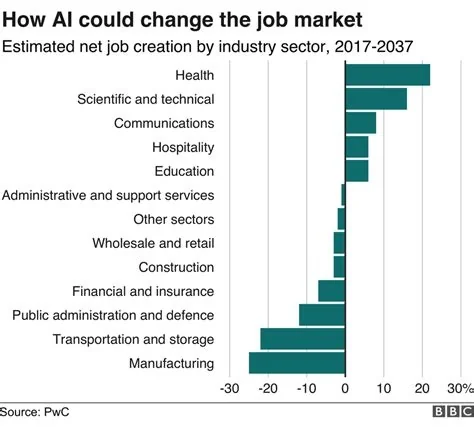
AI adoption has led British firms to experience an overall 8 percent net reduction in staff over the past year, the steepest decline among major economies. The Morgan Stanley study attributes the loss to automation of routine tasks and generative AI, while new AI‑related roles have not kept pace with displacement.
Key Findings from the Morgan Stanley Study
Net Employment Decline
The research shows an 8 percent net drop in employment across surveyed UK companies, combining positions eliminated and new roles created. This figure is double the average net change observed in other leading economies.
Public Concern Over AI Job Threats
More than a quarter of the British public now fears losing their job to AI within the next five years, with heightened anxiety among younger workers, especially Generation Z.
Why AI Is Impacting UK Workforces
Dominant AI Technologies
Generative AI, automated routine‑task tools, and AI‑enhanced analytics are the primary technologies driving workforce changes. These solutions accelerate decision‑making, cut operational costs, and enable service scaling without proportional headcount growth.
Sectors Most Affected
Finance, retail, and manufacturing report the highest AI integration, leading to notable reductions in traditional roles while creating limited new positions in data science, model training, and AI governance.
Policy and Business Implications
Recommendations for Policymakers
- Targeted upskilling programmes to equip displaced workers with AI‑relevant skills.
- Strengthened safety nets that support income continuity during transition periods.
- Incentives for human‑centric AI investments that balance automation with workforce stability.
Risks for Companies
Firms heavily reliant on AI for cost reduction may face reputational damage if large‑scale layoffs attract public scrutiny. Balancing automation with employee retention is becoming a strategic priority.
International Comparison
How the UK Stands Against Other Economies
The UK’s 8 percent net loss contrasts with the roughly 4 percent average reported by the United States, Japan, Germany, and Australia. This gap suggests faster AI adoption in labour‑intensive processes or a less prepared regulatory and training environment.
Future Outlook and Recommendations
If current trends continue, sectors most vulnerable to automation could see further employment erosion. Coordinated efforts among government agencies, industry bodies, and educational institutions will be essential to reskill workers, promote AI‑augmented job designs, and ensure that AI’s economic benefits do not impose unsustainable social costs.


