
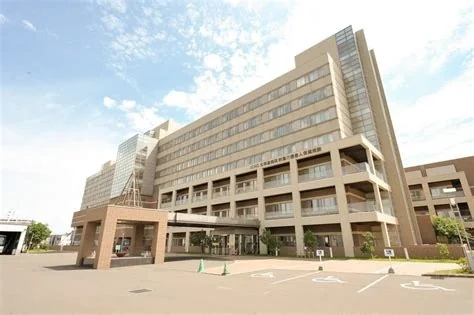
JCHO Hokkaido Hospital has begun a pilot that combines a standard smartphone, on‑premise generative AI, and its EMR platform to automatically draft clinical notes. The closed‑loop workflow captures doctor‑patient conversations, transcribes them with a large‑language model, and creates a draft SOAP note directly in the EMR, aiming to cut documentation time and reduce physician burnout.
How the AI‑Powered System Works
Physicians place an NTT Docomo Business smartphone in the exam room to record natural conversation. The audio stream is sent to an AI‑speech‑recognition engine that transcribes the dialogue with high medical accuracy. The transcription is processed by an on‑premise generative‑AI server, which extracts key clinical elements and composes a draft SOAP note. The note is then transferred via the SMART on FHIR standard to the hospital’s EMR (MI·RA·Is V) for review and finalization, all within the secure hospital firewall.
Why the Pilot Matters for Physicians
Documentation overload is a leading cause of long working hours and burnout. Early internal testing with 50 repeat‑visit patients showed a reduction of more than 20 % in the interval between patient entries, saving an average of 10 minutes 43 seconds per encounter. By automating note drafting, physicians can spend more time on direct patient care, improving satisfaction and clinical outcomes.
Broader Implications for Japanese Healthcare
The on‑premise architecture addresses privacy concerns that have limited cloud‑based AI adoption in medicine. Using ordinary smartphones eliminates the need for specialized hardware, making the solution scalable to smaller clinics and rural hospitals with limited IT budgets. Successful results could provide a template for nationwide deployment of AI‑assisted EMR drafting across Japan.
Next Steps and Expansion Plan
The pilot will initially run in the General Medicine department and other internal‑medicine specialties. Researchers will track documentation time, physician satisfaction, patient wait times, and any impact on diagnostic accuracy. If performance targets are met, the consortium plans to publish detailed results and explore commercialisation of the integrated solution for broader use.
Conclusion
JCHO Hokkaido Hospital’s AI‑driven smartphone pilot offers a concrete path to reduce administrative burdens while preserving patient‑doctor dialogue. By keeping data processing inside the hospital’s secure environment and leveraging state‑of‑the‑art LLM‑based speech recognition, the project sets a benchmark for secure, efficient, and patient‑focused digital health innovation in Japan.


