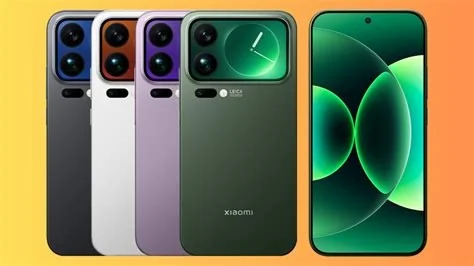
Xiaomi’s upcoming flagship duo, the Xiaomi 17 and Xiaomi 17 Ultra, will hit global markets on February 28 with a trimmed battery capacity and firm pricing of €699 and €999 respectively. Both models keep flagship‑level performance, featuring up to 16 GB RAM, 1 TB storage, Snapdragon 8 Elite Gen 5 and a 6.3‑inch Dragon Crystal Glass display. Here’s what you need to know.
Key Leaks on Pricing and Battery
The announced price points are straightforward: the standard Xiaomi 17 starts at €699, while the premium Xiaomi 17 Ultra is set at €999. Alongside the price, the global versions will ship with smaller batteries than the China‑only models. The Xiaomi 17 will carry a 5,000 mAh cell, and the Ultra will use a 5,500 mAh unit, down from the 7,000 mAh batteries seen in the domestic lineup.
Global Specs Overview
Both phones share a high‑end hardware suite:
- Display: 6.3‑inch panel protected by Dragon Crystal Glass
- Processor: Snapdragon 8 Elite Gen 5 chipset
- Memory & Storage: 16 GB RAM with a 1 TB UFS option
- Connectivity: 5G‑ready modem suite
- Camera: Ultra model adds a higher‑end camera module
Why the Launch Timing Matters
Traditionally, Xiaomi rolls out its flagship in China first and follows months later with a global version. This time the gap shrinks to just a few weeks, positioning the 17 series ahead of rival flagship unveilings. By launching early, Xiaomi aims to capture price‑sensitive buyers before the next Samsung and Apple releases hit the market.
Market Impact
The reduced battery capacity may raise questions about endurance, but a 5,000 mAh pack still delivers a full day of heavy use for most users. The aggressive pricing—€699 for the base model and €999 for the Ultra—places Xiaomi well below competing flagships, which could force rivals to rethink their pricing strategies in Europe and other price‑sensitive regions.
Industry Insights
Technicians note that Dragon Crystal Glass offers better resistance to micro‑scratches, easing warranty repairs. A senior repair specialist in Berlin explains, “If the battery is indeed smaller, we’ll see a shift in how quickly the cells age under fast‑charging cycles. It could actually extend the overall lifespan of the battery, which is a win for both users and service centers.”
Developers also welcome the uniform Snapdragon 8 Elite Gen 5 across regions. One freelance Android developer in Barcelona says, “Having the same chipset worldwide lets us optimize our apps once and expect consistent performance everywhere.” This consistency should reduce fragmentation headaches that have plagued previous releases.
Bottom Line
The Xiaomi 17 and 17 Ultra arrive on February 28 with flagship specs, a modest price advantage, and a deliberate battery compromise for global markets. Whether the trade‑off satisfies you will depend on real‑world endurance tests and how quickly competitors respond with their own pricing moves. One thing’s clear: Xiaomi is betting on a simultaneous global push, and the market will be watching closely.