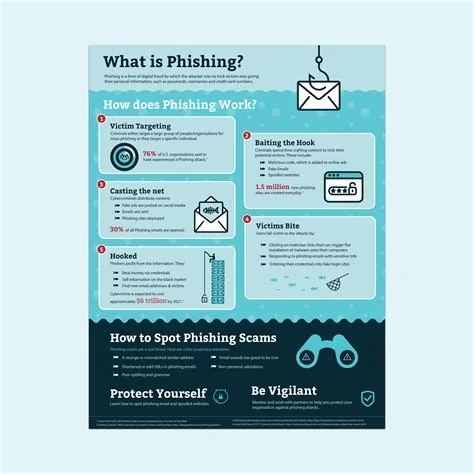
Phishing is a deceptive social‑engineering attack that tricks you into revealing credentials or installing malware. Modern campaigns mimic trusted brands with near‑perfect replicas, use AI‑generated content, and exploit every communication channel. Understanding its evolution and applying layered defenses—like MFA, email filtering, and user training—can stop attacks before they compromise your data.
How Phishing Works
Attackers pose as legitimate entities—banks, cloud services, or coworkers—to lure victims into a false sense of trust. They craft messages that appear authentic, often embedding a malicious link or attachment that captures login details or installs harmful code the moment you interact with it.
Emerging Phishing Tactics
Phishing has branched out beyond plain email. The most common tactics include:
- Spear‑phishing: Targeted attacks using personal information to increase credibility.
- Whaling: High‑profile attempts aimed at executives or decision‑makers.
- Smishing: Fraudulent SMS messages that prompt you to click a link or share data.
- Vishing: Voice calls where the attacker pretends to be a trusted representative.
- Clone phishing: Replicating a legitimate email but swapping a safe attachment for a malicious one.
- AI‑enhanced emails: Text generated by artificial intelligence that mimics writing styles flawlessly.
- Deep‑fake voice scams: Synthetic audio that imitates a colleague’s voice to request sensitive actions.
Why Phishing Is Spiking
The surge is driven by three key factors:
- Remote work expanded the attack surface, pushing more interactions to the cloud.
- Automation tools let low‑skill actors launch massive campaigns with a few clicks.
- AI‑generated content and deep‑fake media make fraudulent messages look eerily authentic.
Impact on Organizations and Individuals
For businesses, a single successful phishing click can trigger a full‑scale breach, exposing customer data, intellectual property, and eroding brand trust. Ransomware groups often use phishing as the entry point, encrypting networks before demanding payment. For individuals, the fallout ranges from identity theft and drained bank accounts to compromised home‑office setups.
Effective Defense Strategies
Layered defenses combined with continuous education are essential. Here’s what you can implement today:
- Multi‑factor authentication (MFA): Adds a second verification step, blocking attackers even if they obtain a password.
- Email security gateways: Sandbox links and attachments to neutralize threats before they reach inboxes.
- Phishing simulations: Regular training that teaches you to spot misspelled domains, mismatched URLs, and unexpected attachments.
- Real‑time alerts: Pop‑up warnings that preview the actual URL when you hover over a link, stripping away obfuscation.
- Threat‑intel sharing: When a new malicious domain is identified, block it across your entire ecosystem promptly.
Expert Insight
Security analysts emphasize that static, annual workshops quickly become outdated. Instead, they recommend short, scenario‑based micro‑learning modules that reflect the latest attack vectors, such as deep‑fake voice phishing. Real‑time alerts that reveal the true destination of a link have been shown to cut click‑through rates on simulated phishing emails by up to 40 %.
Staying Ahead of Phishing
The battle will remain a race between AI‑driven deception and AI‑enhanced detection. However, the fundamentals never change: always verify the sender’s address, question urgent requests, and layer your defenses. If something feels off, double‑check through a separate channel. Remember, taking a minute to confirm a message can save you from a costly breach.