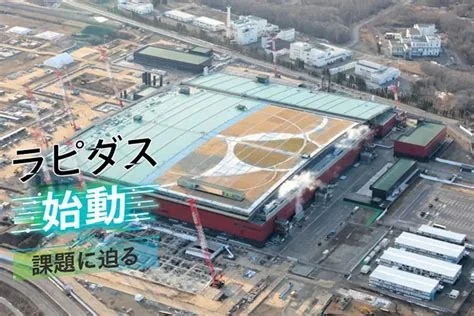
In a significant boost to Japan’s semiconductor industry, Rapidus, a government-backed foundry, has secured approximately $2.7 billion in funding from a consortium of 32 private companies and the government. This development marks a crucial step towards achieving Japan’s goal of domestic 2nm semiconductor production.
Japan’s Semiconductor Ambitions
Rapidus aims to become a major player in the global semiconductor market by producing 2nm chips, a feat that only a handful of countries have achieved. You might wonder how Japan plans to compete with established players like Taiwan, South Korea, and the United States. The answer lies in the country’s desire for self-sufficiency in the semiconductor industry.
Reducing Reliance on Foreign Suppliers
By producing cutting-edge chips domestically, Japan hopes to reduce its reliance on foreign suppliers and ensure a stable supply of critical components for its tech industry. This strategy could pay off, but it’s not without its challenges. The funding round, announced recently, saw the government invest approximately $1 billion through the Information Technology Promotion Agency (IPA), becoming the largest shareholder.
Private Investment and Strategic Significance
The remaining $1.7 billion came from 32 private companies, including industry giants like Canon, Fujitsu, NTT, and SoftBank. For Canon and Fujitsu, two of Japan’s largest tech companies, investing in Rapidus makes sense. By participating in the project, they can secure access to cutting-edge semiconductor technology, reducing their dependence on foreign suppliers and enhancing their competitiveness in the global market.
Overcoming Technical Challenges
Rapidus’s plans to spend around $5 trillion over the next few years to develop and commercialize its 2nm technology will be crucial in helping Rapidus catch up with industry leaders. However, many questions remain unanswered, such as how the company plans to overcome the significant technical challenges associated with producing 2nm chips. You might be wondering if Rapidus will succeed in its ambitious plans or struggle to keep up with the likes of TSMC, Samsung, and Intel.
Technical Perspective and Future Implications
From a technical standpoint, Rapidus’s focus on 2nm technology is intriguing. As the industry approaches the limits of traditional silicon-based manufacturing, companies are exploring new materials and architectures to achieve further scaling. Rapidus’s investment in this area could potentially lead to breakthroughs in areas like quantum computing, artificial intelligence, and the Internet of Things (IoT).
Challenges and Opportunities Ahead
However, it’s essential to acknowledge the significant challenges ahead. The development and commercialization of 2nm technology require substantial resources, expertise, and collaboration. Rapidus’s ability to attract top talent, secure partnerships with leading equipment suppliers, and navigate the complex regulatory landscape will be crucial to its success.
- Rapidus’s $2.7 billion funding round marks a significant milestone in Japan’s quest for semiconductor self-sufficiency.
- The company plans to spend around $5 trillion over the next few years to develop and commercialize its 2nm technology.
- The potential rewards for Rapidus, its investors, and the Japanese tech industry are substantial.
The battle for semiconductor supremacy has just begun, and only time will tell if Rapidus will emerge as a major player in the global semiconductor market.