
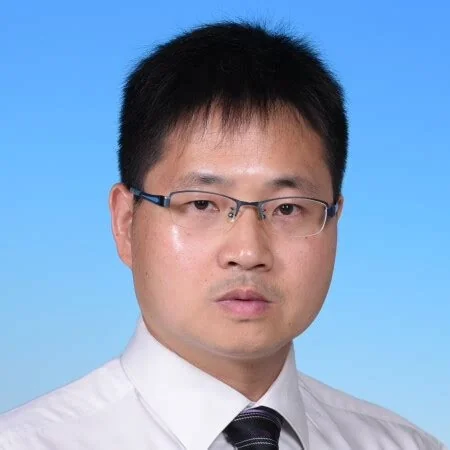
Shengwang Du, Purdue’s Scifres Family Professor of Electrical and Computer Engineering, has been named a senior member of the National Academy of Inventors and is heading an AI neural network experiment on Virgin Galactic’s upcoming sub‑orbital flight. The project will test a light‑based processor in microgravity, showing how university research can move straight into space‑ready technology.
NAI Senior Membership Highlights Du’s Innovation
Being inducted as a senior member of the National Academy of Inventors recognizes faculty who turn research breakthroughs into patented, market‑ready solutions. Du already holds dozens of patents filed through Purdue Innovates and co‑founded a spin‑off that delivers cutting‑edge optical microscopy tools. His work bridges pure curiosity and real‑world impact.
Patents and Commercialization
- 12+ patents covering optical microscopy and quantum sensing
- Co‑founder of Light Innovation Technology USA
- Deputy director of the Purdue Quantum Science and Engineering Institute
AI Neural Network Test on Virgin Galactic
The autonomous payload slated for Virgin Galactic’s sub‑orbital “Purdue 1” flight will study laser‑cooled atoms at near‑absolute‑zero temperatures and run an optical neural network in microgravity. Light‑based AI processors can perform billions of operations per second while consuming a fraction of the power needed by traditional silicon chips. If the test succeeds, you could see ultra‑low‑power AI on satellites and deep‑space probes.
Why Light‑Based AI Matters
Conventional AI chips generate heat and demand substantial cooling—luxuries you don’t have in space. By using photons instead of electrons, the optical neural network promises light‑speed inference with minimal energy draw, a game‑changing advantage for mission‑critical decision making.
Implications for Space and Quantum Technologies
Successful demonstration would validate a new class of AI hardware ready for the final frontier. It also reinforces Purdue’s reputation as a pipeline for quantum‑ready components, giving aerospace firms a proven source of patented technology.
Challenges Ahead
Optical neural networks still face hurdles such as precise alignment, wavelength stability, and seamless integration with existing electronic control systems. The upcoming flight will be one of the first real‑world tests under launch‑induced vibration and microgravity, making it a high‑stakes proving ground.
What This Means for You
If you’re following the evolution of AI hardware, Du’s experiment shows that the next breakthrough could arrive not from a data‑center but from a sub‑orbital rocket. Keep an eye on the results—your future satellite or space‑based platform might soon rely on photon‑driven intelligence.


