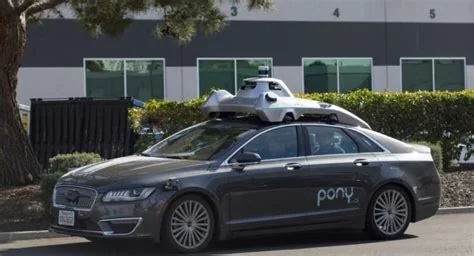
Pony AI, a leading autonomous driving firm, has achieved a significant milestone by reaching unit economics breakeven with its seventh-generation robotaxi fleet in Shenzhen, China. You might wonder what this means for the autonomous driving industry. In simple terms, unit economics breakeven refers to a point where the revenue generated by a single vehicle equals its operational costs. For Pony AI, this achievement demonstrates that its robotaxi service can sustain itself financially.
Understanding Pony AI’s Breakthrough
The company’s Gen-7 vehicles have attained an average of 23 daily orders per vehicle, marking a crucial step towards profitability. This is a significant achievement, and you might be interested in knowing how Pony AI managed to reach this milestone. The Gen-7 vehicles utilize a more cost-effective sensor suite and streamlined manufacturing process, significantly lowering initial capital expenditure compared to previous iterations.
Key Factors Behind Pony AI’s Success
- A more cost-effective sensor suite and streamlined manufacturing process
- A mature proprietary software platform that rarely requires human intervention
- Operational efficiency, with optimized vehicle utilization rates in Shenzhen
By optimizing vehicle utilization rates, Pony AI ensured that cars spent less time idling and more time transporting paying passengers. This high-intensity usage is essential for recouping the costs of sophisticated LiDAR and computing systems onboard. As a result, Pony AI’s robotaxi service can now sustain itself financially, paving the way for widespread adoption.
Implications for the Autonomous Driving Industry
Industry experts believe that Pony AI’s achievement in Shenzhen will likely accelerate the rollout of similar services in other Tier 1 cities. If the unit economics can be replicated in diverse urban environments, the barriers to mass commercialization will largely vanish. But what about the challenges ahead? While Pony AI has made significant progress, technical hurdles remain, particularly regarding complex weather conditions and unpredictable human behavior in traffic.
Overcoming Future Challenges
However, with the financial validation provided by the Gen-7 fleet, the focus is now on scaling the service to provide a viable alternative to traditional ride-hailing and public transit. For autonomous driving companies, achieving unit economics breakeven is a crucial milestone. It demonstrates that their business model is sustainable and can generate revenue to cover operational costs. Pony AI’s achievement in Shenzhen sets a precedent for the industry, showing that robotaxi services can be profitable.
As Pony AI continues to expand its footprint, it will be interesting to see how it addresses the challenges ahead and whether it can replicate its success in other cities. You can expect to see significant developments in the autonomous driving space, and Pony AI’s milestone is a strong indication of what’s to come.
Pony AI’s achievement in Shenzhen is a significant step towards making autonomous driving a reality. With this milestone, Pony AI has proven that its robotaxi service can be profitable, and it will be exciting to see how the company builds on this success in the future.