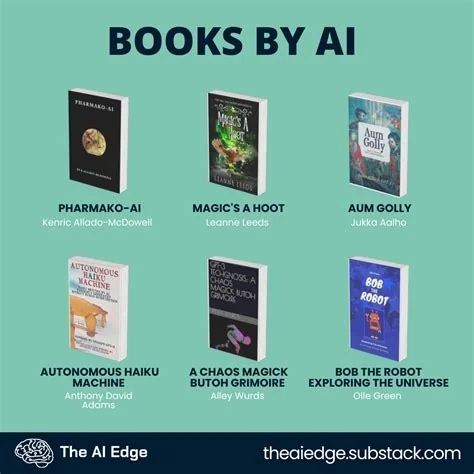
The publishing world is in a bit of a panic, and honestly? It’s long overdue. For years, authors have relied on gatekeepers to separate the wheat from the chaff, but now, a new gatekeeper has emerged: Artificial Intelligence. It’s not just about the robots writing books, though. It’s about the sheer chaos of trying to figure out what’s human and what’s machine-generated.
The Detection Arms Race
According to a recent report, the publishing industry is facing a surge of AI-written manuscripts. This isn’t a sci-fi movie; it’s happening right now. Publishers are scrambling to figure out how to verify these submissions without alienating writers. The irony, of course, is that the tools meant to spot AI are locked in a constant arms race with the AI engines themselves. Early tools looked for statistical quirks—like unusual word frequency or repetitive sentence structures. But AI developers are already fine-tuning their models to mimic human idiosyncrasies, rendering those statistical markers useless.
Visibility and Distribution Challenges
But it’s not just about dodging bad manuscripts. The real headache is the battle for visibility. AI-driven distribution is changing how content is seen, creating new roadblocks for publishers who are used to controlling the narrative. You can have a book, but if the algorithm doesn’t show it, did you ever really publish it?
Japan’s Response to AI in Education
This brings us to Japan, where the discussion is getting a bit more personal. The Japan Book Publishers Association is pushing back, asking tough questions about AI’s role in literature. It’s not just about protecting the integrity of a published book; it’s about preserving the human soul of literature.
Textbook Overhaul
Take high school textbooks, for example. They aren’t just textbooks anymore; they are battlegrounds for the future of education. The Education, Culture, Sports, Science and Technology Ministry recently released the results of textbook screenings, and the findings are revealing. Of the 200 items submitted by 22 publishers, 67 included content specifically addressing the characteristics and risks of AI. That’s a significant shift. Publishers are realizing that if they don’t teach students about AI, someone else will. And the consequences could be dire.
Chikumashobo’s Approach
Take Chikumashobo Ltd.’s Japanese language textbook, for instance. They included a section titled “How to deal with generative AI.” The message was blunt: without the reflections and expressions of humans, texts lose their power to appeal to our intellect and sensibilities. It’s a sentiment echoed across the industry.
Daiichi Gakushusha’s Warning
But it’s not just about Japanese literature. Daiichi Gakushusha Corp.’s English textbook highlighted another danger: disinformation. They cited examples of how AI-generated images caused confusion during disaster relief efforts. It’s a reminder that while AI can be a tool, it’s a tool that can easily be used incorrectly.
Student Usage Statistics
- 46% of high school students already use generative AI for assignments or essays.
- AI tools are already fine-tuning to mimic human idiosyncrasies, evading detection.
Legal and Creative Implications
With over two dozen AI copyright lawsuits currently wending their way through US courts, the legal landscape is a minefield. The Authors Alliance recently weighed in, pointing out that when authors license their work to AI developers for training, they’re often unaware of the long-term consequences. They’re not just losing control of their work; they’re potentially creating an endless stream of derivative content.
In the end, the publishing industry is facing more questions than answers. How do we detect AI-generated content? How do we protect human creativity? And how do we teach the next generation to use these tools without losing their own voice? It’s a challenge, sure, but it’s also an opportunity. The industry won’t just adapt; it will evolve. The only question is, will it be on its own terms, or will it let the algorithms call the shots? We’re watching closely.