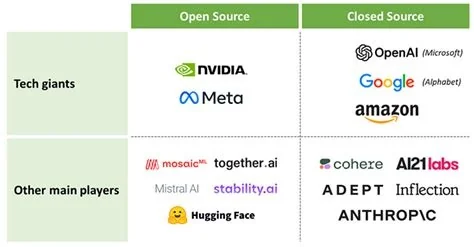
Just eighteen months ago, the tech world had a firm answer for everything. Open source AI was a hobbyist pursuit—good for scripts, bad for enterprise. It was forever chasing the closed models from OpenAI and Anthropic, those trillion-dollar giants with proprietary data and moats so deep they looked like cliffs. That consensus is dead, though, and the open-source revolution is here to stay.
The End of the Moat
That’s because in January 2026, the benchmark data flipped. DeepSeek R1, trained for only six million dollars, matched or beat OpenAI’s o1 on reasoning tasks. Suddenly, those trillion-dollar moats look much smaller, and the hobbyist pursuit is now a serious economic threat. The open-source community isn’t just catching up; they’re biting at the heels of the closed frontier.
There’s a brutal cycle at work here. A closed model trains, publishes a paper, or gets reverse-engineered. Within nine to twelve months, the open source world replicates 80 to 90 percent of that capability for a fraction of the cost. The math is simple: when the cost to replicate capability drops, the value of the “secret sauce” evaporates. If you can run a model with reasoning capabilities on a laptop, it’s hard to justify paying $20 a month for a chatbot that’s just slightly less capable.
From Monopoly to Power Struggle
It’s not just about benchmarks, though. This shift is fundamentally political. The closed-source path isn’t just about profit; it’s about architecture. When you close the source, you aren’t just selling a product; you’re selling a relationship. This brings us to the darker side of the AI boom: neofeudalism.
It’s a term thrown around a lot, but it fits too well. We’ve seen billionaires like Zuckerberg buying islands and building bunkers, effectively creating private kingdoms where hundreds of locals work, performing specific tasks under specific rules. On the tech front, closed AI creates a digital feudal structure. You have your sovereign AI infrastructure, your lords of the compute, and the rest of us trying to get a piece of the pie. The closed model is the castle; the open model is the open field where anyone can farm.
Practitioners Perspective
Users aren’t just buying subscriptions anymore; they are watching where the money goes. On Hacker News, the conversation shifted from technical debate to a harsh reality check. If you close the source, you invite criticism, sure, but you also invite rebellion.
When a model is closed, it becomes a walled garden. If the guardrails are strict or the data is bad, you’re stuck with it. But open source? That’s a weapon. It’s a tool for the people, not the platform owners. We aren’t just seeing a shift in benchmarks; we’re seeing a shift in who controls the future of intelligence, and the open-source community is aggressively seizing that control.