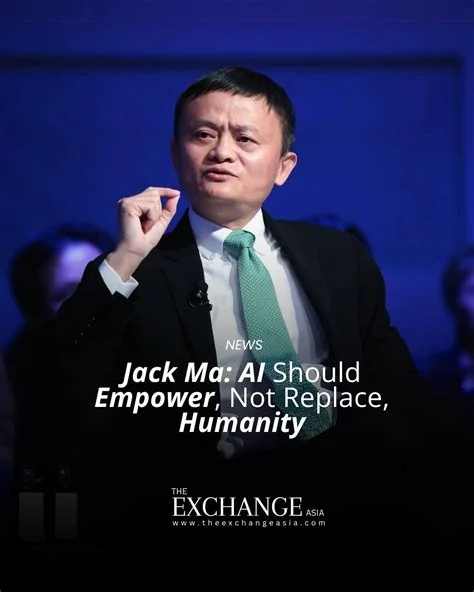
Chinese billionaire Jack Ma and top executives from Alibaba Group Holding and Ant Group recently met with teachers to discuss the impact of artificial intelligence (AI) on education. They emphasized that AI presents both immense challenges and opportunities, and it’s up to you to adapt to and enable transformation in the AI era.
Reimagining Education for the AI Era
Ma and the Alibaba executives are pushing for a shift towards a more creative and imaginative approach to learning, one that focuses on developing skills that are uniquely human. According to Ma, AI offers a chance for education to “return to its essence,” freeing up time spent memorizing textbooks to cultivate creativity and imagination.
The Human-Machine Distinction
Alibaba chairman Joe Tsai highlighted the importance of critical thinking in the AI era, specifically the ability to ask the right questions. Meanwhile, CEO Eddie Wu Yongming distilled the human-machine distinction into three elements: curiosity, empathy, and physical strength, suggesting that sports would become increasingly important in a digital world. You might wonder, what does this mean for your future?
Implementing AI-Driven Education
Ant chairman Eric Jing Xiandong noted that AI should be used to handle repetitive tasks, freeing up people to cultivate their unique qualities, such as aesthetic sense, creativity, and imagination. However, he also cautioned that while relying on AI, people must avoid letting it become an “indispensable crutch.” This approach could lead to a more creative, imaginative, and innovative workforce, but it’s just the beginning.
What’s Next?
- The conversation about AI-driven education has started, and it’s about to get a lot more interesting.
- As AI continues to advance, it’s likely that we’ll see a significant overhaul of the education system.
- The question is, will it be enough to prepare students for the challenges and opportunities that lie ahead?
It’s clear that the current education system needs to adapt to the changing landscape. As you move forward, it’s essential to prioritize education and ensure that students are equipped with the skills they need to thrive in an AI-driven world.
The Future of Education
The implications are far-reaching. If successful, this approach could lead to a more creative, imaginative, and innovative workforce. But, it also raises questions about the role of AI in education. Will AI become a tool for teachers, or will it replace them? These are just a few of the questions that need to be answered as we move forward.