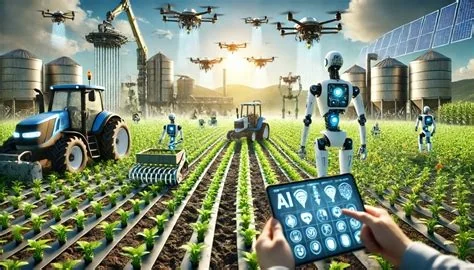
The agricultural sector is undergoing a significant transformation, driven by the integration of Artificial Intelligence (AI) and data analytics. Traditional decision-making methods, based on historical experience, are no longer sufficient in today’s fast-paced and increasingly complex farming landscape. You need to stay ahead of the curve, and that’s where AI comes in – optimizing yields and reducing waste.
Precision Agriculture Takes Center Stage
At the forefront of this revolution is precision agriculture, which leverages AI algorithms to analyze a vast array of data, including soil conditions, weather patterns, and crop health. This enables farmers to make data-driven decisions, minimizing environmental impact while maximizing productivity. For instance, AI-powered precision agriculture can help farmers identify areas of their fields that require more water or fertilizer, reducing waste and improving crop yields.
The Benefits of AI in Agriculture
Smart farming, powered by AI and precision agriculture, is becoming increasingly prevalent. AI tools are optimizing yields, reducing waste, and improving crop quality. For example, AI-powered autonomous robots can monitor crop health, detect pests and diseases, and apply targeted treatments, reducing the need for chemical pesticides and fertilizers. You can see the potential for increased efficiency and reduced environmental impact.
Addressing Concerns and Risks
However, the increasing reliance on AI-driven digital agriculture has raised concerns about corporate control and farmer dependency. There are questions about data ownership, security, and the potential for algorithmic bias. Who owns the data generated by AI-powered farming systems, and how will it be used? These are questions that need to be addressed as the technology continues to evolve.
Prioritizing Transparency and Accountability
As we move forward, it’s essential to prioritize transparency, accountability, and sustainability in the development and deployment of AI in agriculture. This includes ensuring that AI systems are designed with the needs and interests of farmers and the environment in mind. You should be able to trust that AI will be used to benefit farmers and the environment, rather than just corporate profits.
The Future of Farming
From a practitioner’s perspective, the integration of AI in agriculture presents both opportunities and challenges. Farmers must be willing to adopt new technologies and develop the necessary skills to work with AI-powered systems. By prioritizing transparency, accountability, and sustainability, we can ensure that AI serves the interests of farmers, the environment, and society as a whole.
- Optimized yields and reduced waste
- Improved crop quality and reduced environmental impact
- Increased efficiency and productivity
- Enhanced decision-making with data-driven insights
As AI assumes a more prominent role in agriculture, you can expect to see significant changes in the way farming is done. It’s crucial to stay informed and adapt to these changes, ensuring that AI is used for the greater good.
Take control of your farm’s future with AI-powered precision agriculture.
Don’t get left behind – explore the possibilities of AI in agriculture today and discover how you can benefit from this technology.