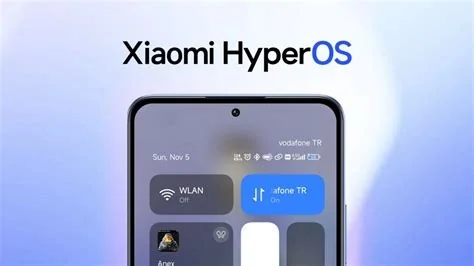
Xiaomi’s HyperOS 3 update is now 95 % deployed across eligible smartphones and tablets, with the stable build already installed on most flagship and mid‑range devices. The company has also begun rolling out the HyperOS 3.1 beta, which introduces a refreshed Super Island UI, performance gains, and new AI‑driven tools. Users can receive the updates via the standard OTA channel.
Current Rollout Status
Stable HyperOS 3 Deployment
The rollout began in October and quickly expanded to over 20 flagship and mid‑range models. Today, the majority of devices have received the stable HyperOS 3 build, leaving only a small group of lower‑tier models for the final phase.
HyperOS 3.1 Beta Availability
Simultaneously, Xiaomi started delivering the first beta of HyperOS 3.1. Early adopters with compatible hardware are receiving the beta through the regular OTA process, gaining access to the new Super Island UI and AI enhancements ahead of the full release.
Background on HyperOS
Transition from MIUI to HyperOS
HyperOS marks Xiaomi’s most extensive software overhaul since the launch of MIUI in 2010. The new platform replaces the long‑standing MIUI skin with a modular architecture designed for faster updates and deeper integration with Android 16.
Android 16 Foundations
Built on Android 16, HyperOS gains access to the latest system‑level APIs, enhanced privacy controls, and a more efficient runtime. These foundations enable the performance and AI improvements highlighted in the 3.1 beta.
New Features in HyperOS 3.1
- Super Island Revamp – The floating shortcut bar now supports adaptive icon scaling, gesture‑based shortcuts, and a dark‑mode‑aware color palette.
- Performance Boosts – Up to a 12 % reduction in app launch latency and a 7 % improvement in battery endurance, thanks to refined memory management and tighter Android 16 power‑saving integration.
- Smarter AI Features – The Intelligent Assistant offers context‑aware suggestions, offline translation for 15 languages, and auto‑filling of forms based on recent activity.
- Enhanced Security – A new Secure Folder encrypts user data with a hardware‑backed key, while the expanded App Permission Guard monitors background activity in real time.
Impact for Users and the Market
With over 300 million active Xiaomi devices worldwide, the near‑complete HyperOS 3 rollout promises a unified software experience that simplifies support and accelerates feature adoption. Aligning with Android 16 reduces fragmentation, making it easier for developers to target a consistent API set across Xiaomi’s ecosystem.
HyperOS differentiates itself through the Super Island paradigm and on‑device AI services, appealing to markets that prioritize data privacy and offline functionality. The shift also challenges competitors by offering a highly customizable and performance‑focused alternative to other OEM skins.
Expert Insights
Software Engineer Perspective
“The transition from MIUI to HyperOS is more than a cosmetic refresh; it’s a structural change that gives developers deeper hooks into the Android 16 stack. The new Super Island API lets apps register dynamic shortcuts that appear contextually, reducing UI clutter and improving discoverability. The reported 12 % launch‑time reduction is credible, thanks to Android 16’s aggressive pre‑fetch mechanisms. Teams should prepare for a learning curve around the new permission model and Secure Folder encryption APIs.”
Product Manager Perspective
“HyperOS’s focus on on‑device AI aligns well with edge‑compute IoT roadmaps. Offline translation and form‑auto‑fill demonstrate a commitment to low‑latency, privacy‑first AI, which is valuable for bandwidth‑constrained environments. We are evaluating HyperOS 3.1 for upcoming smart displays because of its smoother animations and tighter power management.”
Future Outlook
Xiaomi expects the final wave of HyperOS 3 updates to complete by early next year, after which the emphasis will shift to expanding the 3.1 beta across a broader device range. While a public full‑release date for HyperOS 3.1 has not been announced, the current beta cadence suggests a staggered rollout over the coming months.
As the platform matures, users can anticipate a more cohesive experience across smartphones, tablets, and emerging IoT products. Developers will gain new opportunities to leverage Android 16’s capabilities while differentiating through Xiaomi’s proprietary UI and AI features.