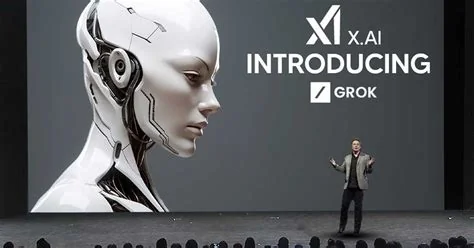
xAI just rolled out the public beta of Grok 4.20, a chatbot that swaps the usual single‑model setup for a team of four specialized agents. When you ask a question, the agents debate, fact‑check, and refine the answer in real time, delivering a single polished response that’s backed by collaborative reasoning.
How the Four Agents Play Together
The architecture is purpose‑built for teamwork. Each agent has a clear role:
- Grok – the project lead that breaks down your query, assigns tasks, and reconciles conflicts.
- Harper – the researcher that scours web content, posts, and internal docs for raw evidence.
- Benjamin – the verifier that runs step‑by‑step reasoning, crunches numbers, and double‑checks code or math.
- Lucas – the creative spark that adds lateral perspectives and unconventional framings.
When a prompt lands, all four agents fire up simultaneously. They don’t just run side by side; they interact, debate, and build on each other’s intermediate outputs before Grok delivers the final answer. You can even watch this “live thinking” via an interface that shows progress bars and notes from each agent as the reasoning unfolds.
Performance That Backs the Hype
According to xAI’s launch materials, Grok 4.20 posts an estimated Arena ELO of 1,505–1,535, putting it shoulder‑to‑shoulder with top competitors. On the ForecastBench leaderboard, the system ranked second globally, beating models that previously held the top spots.
Beyond raw scores, xAI highlights a 65 % drop in hallucinations, shrinking the error rate from roughly 12 % to 4.2 %. The built‑in peer‑review loop among the agents appears to be the key driver of that improvement. In a proprietary Alpha Arena stock‑trading simulation, Grok 4.20 generated a +34.59 % return, while competing models posted losses.
From Single‑Model Supremacy to Team‑Based Reasoning
The AI race has long chased bigger context windows and higher benchmark scores within a single monolithic model. Grok 4.20 flips that script by letting four specialized agents reason together in real time. This isn’t just a chatbot upgrade—it’s a shift toward modular, collaborative AI teams.
By assigning clear functional niches, each agent can excel at its own task, while the group as a whole catches errors the individual might miss. The result is a faster, more reliable insight pipeline that feels like a mini‑research lab in the cloud.
What “Heavy” Means
xAI also introduced a “Heavy” tier—Grok 4.20 Heavy—that unleashes 16 specialized agents to tackle large‑scale research projects as a coordinated team. This tier is currently limited to SuperGrok Heavy users, who can tap into the full power of the expanded roster.
Practitioner’s Perspective
One data‑science lead who’s been testing Grok 4.20 said, “The multi‑agent setup feels like having a mini‑research lab in the cloud. Harper pulls the data I’d otherwise spend an hour hunting, Benjamin catches the statistical slip‑ups, and Lucas nudges me toward creative visualizations I wouldn’t have considered. The result is a faster, more reliable insight pipeline—though we still need to validate the final output before production.”
Implications for the Broader AI Ecosystem
If Grok’s early performance holds up, the multi‑agent model could force a rethink of how AI products are packaged. Consumers may start expecting “team‑based” reasoning as a baseline feature, nudging competitors to add internal checks or modular pipelines. For enterprises, the approach offers a clearer audit trail: each agent’s contribution can be logged, inspected, and even swapped out if a particular specialty falls short.
The shift also raises questions. Will the added complexity inflate compute costs, making the service pricier for you? How will developers integrate such a system into existing workflows built around single‑model APIs? And—perhaps most crucially—will the “debate‑and‑synthesize” paradigm scale beyond chat into more autonomous AI agents?
The launch itself is a bold statement: the era of single‑model dominance is giving way to collaborative AI teams, and xAI has put a working prototype in everyday hands. Whether this becomes the new norm or remains a niche experiment, Grok 4.20 has already nudged the conversation in a fresh direction.