
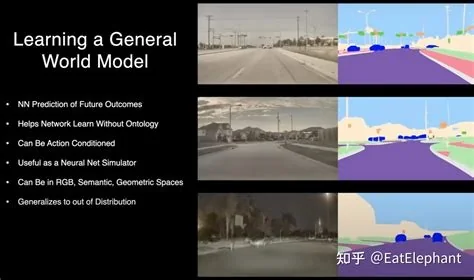
World model AI creates a virtual replica of physical laws, letting machines predict dynamics, generate rare scenarios, and train robots without real‑world risk. By learning physics directly from data, these models boost safety for autonomous vehicles, improve robot intuition, and shorten research cycles. You’ll see faster, more reliable simulations that mirror real‑world complexity.
How World Model AI Works
Learning Physical Laws from Data
Instead of hard‑coding equations, the system ingests streams of sensor or video data and discovers underlying relationships. It then builds a latent representation that can forecast how objects will move, bounce, or deform under various forces. This approach lets the AI act like a mental physics engine.
Generating High‑Fidelity Scenarios
Once trained, the model can synthesize situations that are statistically rare but physically accurate—think sudden gusts that tumble a plastic bag or slippery road patches that test traction. These synthetic episodes feed directly into downstream planning modules, reducing the need for costly real‑world testing.
Key Industry Applications
Autonomous Driving Simulations
Self‑driving teams use world model AI to craft hyper‑realistic traffic events that rarely appear on public roads. By stress‑testing perception and planning pipelines with these edge cases, they close safety gaps before any vehicle hits the street.
Generalist Robotics
Robotic platforms benefit from a model that predicts object interactions, enabling tasks like block stacking or navigating cluttered workspaces. The AI’s intuition about physics lets a single robot adapt to new objects without reprogramming each time.
Benefits and Challenges
Safety and Efficiency Gains
Safety improves because rare hazards can be explored safely in simulation. Efficiency rises as developers iterate faster, swapping costly field trials for virtual experiments.
Data and Compute Demands
Training a robust world model still requires massive datasets—think tens of thousands of hours of video—and powerful compute clusters. Teams must balance model fidelity with the ability to run thousands of simulations daily.
Future Outlook
The next wave will push world models onto edge devices, letting cars and robots reason about physics locally instead of relying on cloud services. As you adopt these tools, you’ll notice quicker development cycles, more adaptable machines, and a steady march toward AI that truly understands the world it inhabits.


