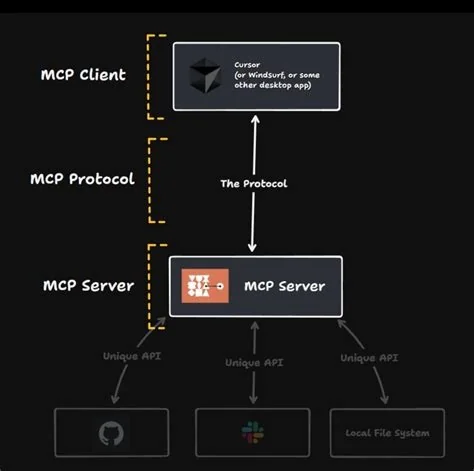
WebMCP turns any website into a machine‑readable API, letting AI agents call site actions directly without scraping. By exposing forms, buttons, and workflows as structured JSON, the new browser‑level API cuts latency, boosts reliability, and shifts the integration burden from the AI to the site. You get faster results while sites keep control over what AI can do.
Understanding WebMCP
At its core, WebMCP is a browser‑embedded service that translates a page’s interactive elements into a concise JSON contract. When a user interacts with a site, the browser can package the declared action—such as “add to cart” or “search flights”—and hand it to an AI assistant that knows exactly how to invoke it. This eliminates the guesswork of parsing HTML and reduces the chance of breaking when a site redesigns its layout.
Declarative vs Imperative APIs
WebMCP offers two integration styles. The declarative mode lets developers tag existing HTML controls with attributes like data-mcp-action="search", enabling an AI to trigger the action with a single call. The imperative mode lets a site expose a full workflow—adding an item, applying a discount, and checking out—in one atomic request, giving richer control over multi‑step processes.
Developer Experience and Real‑World Gains
Early adopters report noticeable speed improvements. By annotating a “Add to Wishlist” button, a GPT‑4‑powered shopping assistant reduced the time to add an item from over two seconds (full page scrape) to under two hundred milliseconds with a direct API call. The main effort lay in mapping existing authentication flows into the WebMCP contract, but the resulting clarity simplified downstream AI development.
Performance Benefits
Because the browser handles the heavy lifting, AI agents avoid costly DOM traversal and can focus on intent interpretation. You’ll see lower CPU usage, fewer failed interactions, and a smoother user experience when the assistant completes tasks like booking a flight or pulling a product list.
Security and Governance Considerations
Exposing site actions through a browser API raises important security questions. Sites must decide whether to block all bots or to provide structured access for trusted agents. WebMCP places the browser as a gatekeeper, meaning that authentication, rate limiting, and explicit user consent become essential safeguards.
Authentication and Rate Limiting
Effective deployment will likely involve signed capability tokens that a site issues to a vetted AI provider. These tokens can define which actions are allowed, enforce usage quotas, and ensure that only authorized agents can invoke sensitive workflows. Proper rate limiting also prevents abuse and protects site performance.
Future Adoption Factors
Three pillars will determine how quickly WebMCP becomes the default for AI‑web interaction. First, browsers need stable, production‑grade support beyond experimental flags. Second, AI platform providers must integrate WebMCP into their toolkits so that agents can discover and call site‑exposed actions out of the box. Third, a clear security model—such as capability‑based tokens—must gain industry consensus.
Browser Support, AI Integration, and Secure Tokens
Chrome already offers an experimental toggle, and other engines are expected to follow. AI services like OpenAI, Anthropic, and Cohere are positioned to adopt the API, turning “scrape the web” into “call the site’s API.” Meanwhile, a robust token framework will give sites confidence that only authorized agents can execute privileged actions.
Conclusion: Will WebMCP Redefine AI‑Web Interaction?
WebMCP promises a shift from brittle screen‑scraping to a contract‑first model, delivering lower latency, higher accuracy, and better user experiences. If browsers ship solid support, AI platforms embed the API, and security standards solidify, the web could finally gain a native AI‑ready layer. You may soon see AI assistants acting on your behalf with the same reliability as native site features—without sacrificing the human‑centric design that defines the web today.