
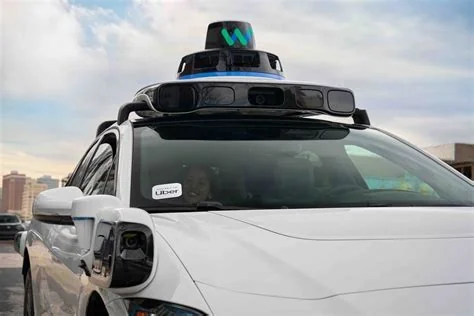
Wayve just secured $1.5 billion to roll out its driverless robotaxi service on Uber’s platform, starting with commercial trials in London. The Series D round pushes Wayve’s valuation to $8.6 billion and backs its “embodied AI” software that runs entirely on‑vehicle, promising a low‑cost, map‑free path to autonomous ride‑hailing. The funding also locks in Uber as a rollout partner across multiple markets.
Funding Details and Key Investors
The injection of $1.5 billion came from a mix of financial backers and strategic players. Eclipse Ventures, Balderton and SoftBank Vision Fund 2 led the round, while Ontario Teachers’ Pension Plan, Baillie Gifford, British Business Bank, Icehouse Ventures and Schroders Capital participated. Strategic investors Microsoft, NVIDIA and Uber joined to signal confidence in Wayve’s embodied AI model.
Embodied AI: A Map‑Free Software Stack
Wayve’s core offering is an end‑to‑end AI platform that lives entirely on a vehicle’s onboard compute. By sidestepping high‑definition map creation, the “zero‑shot” model can be deployed anywhere without location‑specific engineering. In the past year the system has logged drives across more than 500 cities in Europe, North America and Japan, positioning Wayve as a pioneer of large‑scale, map‑free autonomy.
Why Zero‑Shot Matters
- Cost efficiency: eliminating custom map layers cuts integration expenses.
- Speed to market: a single neural‑network can be licensed to automakers for rapid rollout.
- Flexibility: the same software works across different vehicle platforms.
London Robotaxi Rollout Plan
London will host the first commercial trials later this year. Wayve aims to field a fleet of driverless cars that navigate city streets under its embodied AI stack. If you’re following the autonomous‑vehicle race, you’ll see London become a critical proving ground for the technology.
Trial Timeline
- Q3 2024 – Begin limited‑area pilot with Uber riders.
- Q4 2024 – Expand coverage to major London corridors.
- 2025 – Evaluate performance and prepare for broader market rollout.
Competitive Landscape
Traditional players such as Waymo, Cruise and Tesla rely on sensor‑heavy, map‑centric solutions. Wayve’s approach offers a leaner alternative: a unified neural‑network that can be licensed directly to manufacturers, potentially lowering per‑car integration costs and accelerating fleet scaling. This could shift economics in Wayve’s favor as the market looks for scalable software‑only solutions.
Future Roadmap: From Robotaxis to Consumer Licensing
Beyond robotaxis, Wayve plans to license its AI Driver to consumer vehicles starting in 2027. The initial offering will provide L2+ “hands‑off” capability, allowing a car to steer, navigate and respond to traffic while a driver remains ready to intervene. The long‑term vision includes L3/L4 “eyes‑off” autonomy that can handle most driving situations without human supervision.
Regulatory and Market Challenges
The UK Department for Transport still requires rigorous safety validation before fully driverless services can operate at scale. Wayve must prove its onboard AI meets “eyes‑off” safety standards and earn public trust for driverless rides in dense urban corridors. Transparent safety reporting and robust contingency planning will be essential to win over regulators and riders alike.
Implications for the Autonomous Mobility Sector
The $1.5 billion raise signals strong investor belief that a software‑centric, map‑free model can finally make robotaxis commercially viable. With Uber providing an immediate, high‑visibility deployment channel, Wayve is positioned to test its technology in a real‑world, high‑density environment. If the London trials succeed, the same software could be rolled out to a dozen additional markets, reshaping how autonomous ride‑hailing is delivered.


