
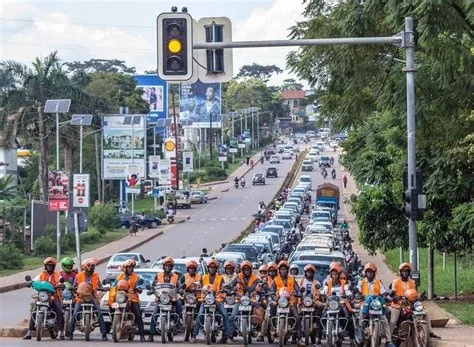
Uganda’s Kampala Capital City Authority has rolled out AI‑powered traffic lights at five busy intersections, aiming to shrink the city’s notorious gridlock. The system reads vehicle flow, pedestrian movement and weather in real‑time, then tweaks signal timing by seconds. Early data suggest commuters could shave minutes off peak‑hour trips while enjoying smoother rides and cleaner air.
How the AI Traffic Lights Operate
The new lights rely on a network of sensors embedded in the road surface and mounted on poles. These devices count vehicles, measure queue lengths and detect pedestrian crossings. All data stream to a cloud‑based algorithm that continuously recalibrates green‑light intervals to match actual demand.
Sensor Network and Cloud Algorithm
Each intersection hosts infrared counters, radar units and weather detectors. The cloud platform aggregates this input, runs predictive models and sends updated timing instructions back to the controllers within seconds. Because the system learns from every cycle, it becomes more accurate the longer it runs.
Early Results Show Faster Commutes
KCCA officials report that the pilot has already reduced average peak‑hour travel times by about eight minutes on the tested routes. Drivers notice shorter stops, and pedestrians experience smoother crossing phases.
- Reduced travel time – up to eight minutes saved per trip.
- Lower fuel consumption – smoother flow cuts idling.
- Decreased emissions – fewer stop‑and‑go cycles improve air quality.
If you’re a daily commuter, you’ll likely feel the difference the next time you navigate the city centre.
Challenges and Expert Concerns
Transport specialist Meddie Musisi cautions that the technology is only as good as the data it receives. “Without proper calibration, AI could unintentionally favour certain corridors and shift congestion elsewhere,” he warned. Musisi stresses the need for a manual override so traffic officers can intervene during unexpected events such as market stalls or sudden rainstorms.
Implications for Kampala’s Urban Future
The AI‑driven system offers a scalable foundation for broader mobility strategies. Sensor data can inform bus‑route redesigns, identify high‑demand corridors and support future public‑transport projects. As Kampala’s population continues to grow, adaptive solutions like these may become essential to keep the city moving.
For now, commuters can expect a smoother ride at the pilot sites, while city planners gather hard evidence to decide whether to expand the technology citywide. If the early gains hold, Uganda could set a new standard for intelligent traffic management in East Africa.


