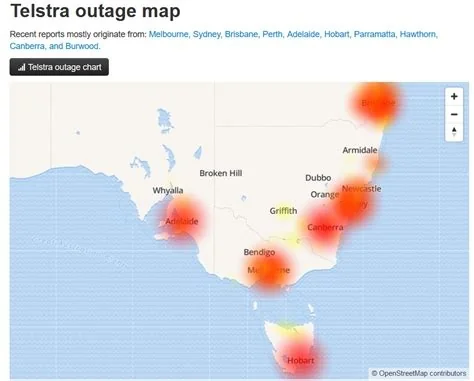
Telstra’s network is experiencing widespread service interruptions across Australia, leaving both residential users and businesses without reliable voice, mobile data, or fixed broadband. The outages stem from a mix of hardware failures, software glitches, and possible weather interference, and they affect key regions such as Torquay. Below you’ll find a clear breakdown of what’s happening and practical ways you can stay connected.
Current Outage Landscape
The Telstra status portal now shows real‑time alerts for multiple regions. An interactive outage map lets you zoom in on your postcode to see whether your neighbourhood is part of a larger incident or an isolated glitch. As of today, several hotspots remain active, with the Torquay area experiencing the most severe service degradation.
Planned vs. Unplanned Outages
Telstra regularly schedules maintenance windows and publishes “planned mobile network outages” notices so you can arrange calls or data transfers around them. The recent Torquay incident, however, appears to be unplanned—users have reported intermittent shutdowns, dropped calls, and spotty 4G coverage since February 25. The key difference is that planned outages give you a heads‑up, while unplanned events catch everyone off guard.
Root Causes Behind Repeated Disruptions
While Telstra hasn’t released a detailed post‑mortem for the Torquay slowdown, the pattern matches typical network strain: aging hardware, software bugs, and potentially weather‑related damage. These factors can combine to overload the system, leading to the intermittent outages that have been reported across the country over the past week.
Impact on Consumers and Businesses
For everyday users, a few hours without service means no streaming, no scrolling, and missed communications. For businesses that rely on Telstra’s mobile broadband—such as point‑of‑sale terminals, field staff, or remote monitoring—a sudden loss can stall transactions, delay critical updates, and erode customer confidence. The repeated outages are prompting many organisations to consider backup connectivity options.
Actionable Steps to Minimise Impact
- Check the live outage map before heading out for a field job; a quick glance tells you if you’re entering a hotspot.
- Use the 000 safety net—emergency calls still get through via overlapping towers, even when your regular signal drops.
- Plan around scheduled maintenance by syncing heavy data tasks (software updates, large uploads, backups) to off‑peak times when the network is stable.
- Consider a backup carrier if your work can’t tolerate downtime; a modest data‑only SIM from another provider can serve as a lifeline.
- Stay informed via Telstra channels—the dedicated app, phone support, or online portal can push real‑time alerts straight to your device.
Building Redundancy for the Future
Network engineers stress that outage resilience is a design choice, not an afterthought. Adding layered redundancy—whether through a secondary LTE provider, a fixed‑line DSL connection, or a satellite link—turns a single point of failure into a manageable risk. No network is 100 % immune, but a well‑planned backup strategy ensures that a single outage won’t cripple core operations.