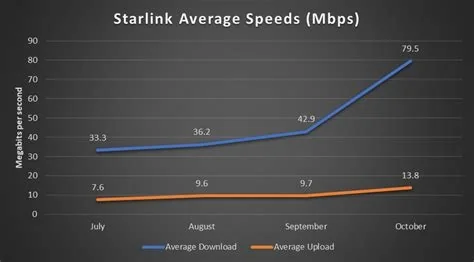
Starlink’s latest Gen 3 kits now deliver 300‑360 Mbps across new regions, giving you faster video calls, seamless gaming, and 4K streaming even in remote areas. The service expands into Latin America, Australia, and rural U.S. markets, positioning Starlink as the leading low‑Earth‑orbit broadband provider and pushing satellite internet into the high‑speed tier.
How the 300‑360 Mbps Speeds Benefit You
The higher caps let households run multiple 4K streams, low‑latency online games, and reliable video conferences without a traditional ISP. Families in isolated locations can finally enjoy the same online experience as city dwellers, and small businesses gain a viable connection for cloud services and VPNs.
Gen 3 Hardware: Antenna and Processor Enhancements
Starlink’s Gen 3 kit features a larger phased‑array antenna and upgraded onboard processors. These upgrades are the primary drivers behind the speed jump, allowing the terminal to maintain strong links even during high‑wind events or when signal obstruction occurs. Existing Gen 2 users notice slower performance under the same conditions, which is why many are opting to upgrade.
Consumer Plans Powered by the New Speed
- Roam Unlimited – up to 300 Mbps, no data caps, $165 per month.
- Max Residential – up to 400 Mbps, $120 per month.
Both plans are designed for users who need consistent high‑speed connectivity, whether they’re streaming, gaming, or running a home office.
Industry Ripple Effects
With near‑fiber speeds from orbit, traditional satellite providers face a steep climb to stay competitive. The performance gap is widening as Starlink’s footprint grows, forcing rivals to rethink their technology roadmaps. Moreover, the prospect of a Starlink‑enabled mobile device could blur the line between satellite and cellular networks, prompting mobile carriers to revisit coverage strategies in underserved markets.
Regulatory Landscape for LEO Growth
The surge in low‑Earth‑orbit traffic raises questions about spectrum allocation and orbital debris management. Regulators are closely monitoring the rapid deployment of thousands of new terminals, and Starlink has begun filing for additional frequency bands to support the expanded service. Ongoing coordination with national communications authorities will be essential to sustain growth.
Field Engineer Perspective
John Martinez, a field engineer specializing in broadband deployments, says the Gen 3 rollout “has been the most noticeable performance upgrade we’ve seen in satellite broadband in years.” He notes that installation crews are reporting fewer latency spikes, and the higher throughput “makes it feasible to run small‑business VPNs and cloud services from locations that were previously off‑grid.” Martinez cautions, however, that the upfront equipment cost remains a barrier for some households, so you’ll still see a split between early adopters and those waiting for price reductions.