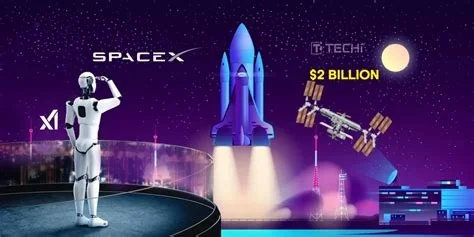
SpaceX’s merger with xAI creates a single powerhouse that will build solar‑powered AI satellites, turning orbit into a massive compute platform. The deal combines SpaceX’s launch capability with xAI’s Grok models, promising low‑latency AI services from space and a long‑term plan for a self‑replicating lunar AI hub. Here’s what you need to know.
Why the Merger Matters for Space Tech
The union gives SpaceX direct access to cutting‑edge generative AI, while xAI gains a reliable launch pipeline. Together they can deliver AI‑driven services without the latency of ground‑based data centers, a benefit you’ll feel in applications ranging from autonomous navigation to real‑time analytics. This blend of rockets and algorithms reshapes how compute is distributed across the sky.
Technical Blueprint of Solar‑Powered Orbital AI Hubs
Satellite Architecture
Each hub is a compact satellite equipped with high‑throughput processors, solar arrays that capture near‑constant sunlight, and a lightweight thermal‑radiator system. The design prioritizes modularity, allowing the fleet to scale to a million units over the next decade.
Power and Thermal Management
Even with abundant solar energy, dissipating heat in vacuum is tricky. Engineers are integrating advanced heat‑pipe technology and reflective coatings to keep AI workloads within safe temperature limits. This approach ensures continuous operation without overheating.
Financial Impact and Market Outlook
The merger values the combined entity at roughly $1.25 trillion, executed as a cash‑free stock swap. Analysts expect revenue from AI‑satellite services to outpace traditional launch contracts within ten years.
- Revenue potential: Subscription‑based AI compute could generate tens of billions annually.
- Investor appeal: The vertically integrated stack attracts both aerospace and software investors.
- Public offering: Plans are underway for a potential public listing that could exceed $1.5 trillion.
Engineering Challenges and Risks
Deploying a massive satellite swarm raises concerns about orbital debris and regulatory compliance. The lunar self‑replicating hub also depends on in‑situ resource utilization (ISRU) technology that’s still in prototype stages. Nevertheless, the merged talent pool and capital base give the project a realistic path forward.
Roadmap and Future Outlook
The first batch of orbital AI hubs is slated for launch aboard Starship within the next year, with a full constellation rollout targeted for the early 2030s. If the timeline holds, a functional AI city on the Moon could appear by the mid‑2030s, turning the lunar surface into a self‑sustaining compute outpost.
- Launch of initial satellites: next 12 months
- Full orbital network: early 2030s
- Lunar AI hub prototype: mid‑2030s