
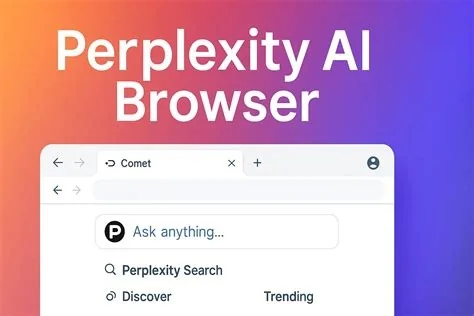
Perplexity just unveiled Perplexity Computer, a browser‑resident AI platform that lets you describe a high‑level goal and watch the system turn it into a complete, hands‑free workflow. Whether you need a market‑trend dashboard or a quick data report, the tool breaks the task into steps, runs each step in an isolated agent, and stitches the results together—all from within your browser.
How Perplexity Computer Works
The system doesn’t wait for a single prompt. It first parses your desired outcome, then decomposes it into discrete subtasks. Each subtask is handed off to a specialized agent that runs inside its own sandbox, complete with browser access, file‑system permissions, and tool integrations. If a subtask stalls, extra agents can spin up to troubleshoot, while a coordination layer routes work to the most suitable model from a pool of 19 AI models.
Task Decomposition and Sub‑Agents
At launch, the core reasoning engine runs on Opus 4.6. The model roster includes Gemini for web research, Nano Banana for image generation, Veo 3.1 for video creation, Grok for lightweight operations, and ChatGPT 5.2 for long‑context recall. The architecture stays model‑agnostic, letting you pick the right model for each subtask and manage token consumption through a credit‑based pricing plan.
Browser‑First AI Agent Architecture
What sets Perplexity Computer apart is its tight integration of a full‑featured browser. By embedding a browser, the platform can navigate the open web, scrape data, fill out forms, and even interact with SaaS dashboards—all under AI control. This browser‑first approach lets the system act like a human user, handling everything from research to export without you lifting a finger.
Full‑Featured Browser Integration
Imagine typing, “Track quarterly earnings for the top 50 fintech firms and generate a visual report.” The system will research filings, pull numbers into a spreadsheet, generate charts, write a narrative summary, and export a PDF—all within the same browser session.
Market Position and Use Cases
Perplexity isn’t the only player offering autonomous AI workflows, but its focus on a browser‑first experience gives it a unique edge. By bundling research, design, coding, and app‑management under one roof, it appeals to teams that currently juggle multiple specialized tools. The platform targets enterprises looking to offload routine data‑gathering, report generation, and low‑code development to intelligent agents.
Target Audience and Benefits
Developers get a shortcut from idea to prototype, analysts can automate data pipelines, and product teams can spin up digital workers that prototype UI mockups and generate supporting copy—all without leaving the browser.
Practical Implications for Teams
For a developer, the platform can turn a brief into a working prototype in minutes. A data analyst might ask the system to scrape competitor pricing, train a quick model, and produce a dashboard—all within the same session. Product teams can let the AI handle UI interactions, generate visuals, and draft copy, shaving weeks off early‑stage iterations.
Developer Shortcut
The isolated compute environments help mitigate security concerns, while token caps and model selection controls let IT teams keep spend predictable.
Real‑World Feedback
Early testers reported that a simple request like “Create a weekly churn‑rate report for our subscription base” produced a complete PDF report in under fifteen minutes, consuming roughly 1,200 tokens—comparable to a few hours of manual work. Users highlighted the ease of letting the AI handle UI interactions, such as logging into a SaaS dashboard, downloading a CSV, and feeding the data into a script.
Challenges and Considerations
Despite the promise, error handling still leans heavily on the AI’s ability to diagnose its own failures. While extra agents can troubleshoot, there’s no guarantee of convergence on a correct solution. The current rollout is limited to Perplexity Max subscribers, meaning early adopters bear the cost of experimentation. Teams will also need to weigh credit‑based pricing against building in‑house automation pipelines.
Bottom Line
Perplexity Computer arrives as AI agents race to prove measurable business value. By anchoring its offering in a browser environment and coupling a diverse model stack, it positions itself as a one‑stop shop for end‑to‑end digital work. Whether it becomes a staple for developers, analysts, and product teams will hinge on reliability, cost‑effectiveness, and governance ease. If you’ve ever wished a single sentence could spawn a full report, prototype, or data pipeline, Perplexity Computer might be the first browser‑based attempt to turn that wish into a routine reality.


