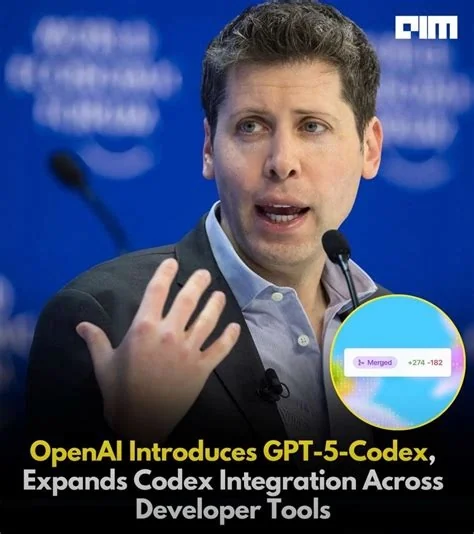
OpenAI’s GPT‑5.3‑Codex is a next‑generation coding agent that runs up to 25 % faster than its predecessor and can debug its own training pipeline. It breaks high‑level goals into sub‑tasks, updates you with progress, and self‑heals when errors arise, turning code generation into an interactive, collaborative workflow you can rely on.
Major Speed Gains
The new model delivers a 25 % reduction in inference latency, which translates into tighter feedback loops during continuous integration and deployment. Faster responses mean you spend less time waiting for suggestions and more time refining architecture.
- Improved throughput on command‑line benchmarks.
- Quicker generation of boilerplate and repetitive code.
- Reduced idle time in CI/CD pipelines.
Self‑Healing Capabilities
GPT‑5.3‑Codex can monitor its own training runs, spot anomalies, and apply corrective actions without human intervention. This self‑diagnosis helps keep the model stable and lowers the operational overhead of maintaining large‑scale deployments.
Key benefits include:
- Automatic debugging of failed training epochs.
- Real‑time adjustment of hyperparameters.
- Continuous improvement loop that minimizes manual re‑training.
How the Agent Handles Real‑World Coding Tasks
When you give the agent a high‑level objective—such as “optimize this microservice for latency”—it creates a step‑by‑step plan, executes each sub‑task, and pauses for your input after every milestone. This “mid‑turn steering” keeps you in control while the model handles the heavy lifting.
Progress Updates Keep You Informed
Frequent status messages show exactly what the agent is doing, letting you intervene if a direction doesn’t match your expectations. The result is a collaborative partnership rather than a black‑box generator.
Migration Path for Existing Integrations
The API is backward‑compatible, so you can upgrade with a single version bump. Most developers report a painless transition when swapping the old Codex endpoint for the new one.
- Drop‑in replacement for Copilot‑style tools.
- No code changes required beyond the version update.
- Immediate access to speed and self‑healing features.
Implications for Development Teams
Teams can expect faster code reviews, lower latency in automated testing, and an audit trail of the agent’s reasoning steps. This transparency helps meet compliance requirements and builds trust in AI‑augmented workflows.
Open Questions and Considerations
While the self‑healing loop is promising, you’ll want to verify that its diagnostics are transparent enough for auditors. Balancing autonomous operation with human oversight remains a critical challenge, especially for safety‑critical codebases.
Overall, GPT‑5.3‑Codex moves beyond simple autocomplete to become a genuine collaborator in the software development lifecycle. Whether you’re a solo developer looking for a smarter pair‑programmer or part of a large engineering org seeking efficiency gains, the new capabilities are designed to make AI‑assisted coding feel like a daily reality.