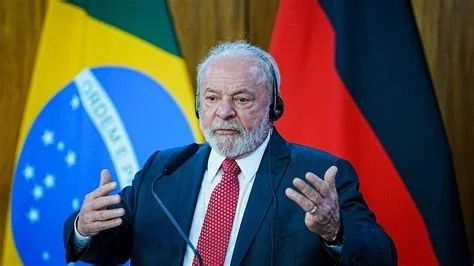
Brazilian President Luiz Inácio Lula used his final Delhi press conference to urge BRICS members to reduce reliance on the U.S. dollar and settle more trade in local currencies. He argued that de‑dollarisation can lower costs, boost sovereignty, and create space for stablecoins and central‑bank digital currencies. The message targets fintech firms, policymakers, and anyone watching cross‑border payments.
De‑dollarisation: Shifting Trade Currency
Lula emphasized that Brazil and India can trade directly in the real and rupee without defaulting to dollars. While he warned that the transition won’t happen overnight, he said the goal is to increase local‑currency settlements wherever feasible. This shift could soften demand for dollar‑backed stablecoins and give CBDC projects like Brazil’s “real‑coin” and India’s “digital rupee” a clearer role in international trade.
Fintech Impact and Stablecoin Strategy
For fintech players, the signal is both an opportunity and a warning. If you run a stablecoin platform, you’ll soon need multi‑currency support or new bridges to connect with emerging CBDC networks. Stablecoin issuers may have to back tokens with a basket of emerging market currencies or develop direct links to sovereign digital tokens to stay relevant in a market that’s eyeing lower‑cost, sovereign‑backed solutions.
Geopolitical Context
Lula noted that the United States naturally wants to protect the dollar’s global dominance, but he framed BRICS as a “force of the Global South” that can rebalance that power. The push reflects a broader narrative where emerging economies seek more control over their trade flows and reduce exposure to external monetary policy.
Practitioner Insight
Dr. Carlos Mendes, lead architect of Brazil’s CBDC platform, explained that the real‑coin is designed for high‑value, low‑frequency domestic transactions and could be extended to bilateral trade with India. He said the central bank is already piloting “real‑coin to real‑coin” swaps with Indian counterparts, a proof‑of‑concept that could scale if political will matches technical readiness.
What’s Next?
Lula did not set a specific timetable, acknowledging that “you cannot undo this system overnight.” However, the message is clear: the Global South is ready to test a new equilibrium where sovereign digital currencies and locally‑backed stablecoins share the stage. Expect a wave of pilots, partnerships, and potentially the first real‑world trade settlement that skips the dollar, prompting fintech innovators to prepare for a multi‑currency future.