
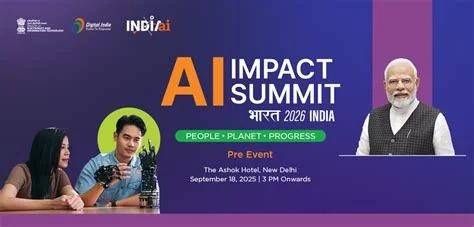
At the two‑day India AI Summit, government leaders and tech innovators revealed a bold shift toward non‑linear learning models that adapt to chaotic real‑world data. The event highlighted new tools for farmers, gender‑inclusive AI, and policy drafts that could reshape India’s tech landscape. You’ll see why this approach matters for startups and public services alike.
Why Non‑Linear Learning Matters
Traditional AI relied on linear, data‑heavy pipelines that struggle with unpredictable inputs. Non‑linear learning, by contrast, continuously refines its models as new information arrives, making it ideal for challenges like climate‑varying agriculture or rapidly changing regulations. This mindset is turning complex problems into manageable feedback loops.
From Theory to Farm‑Level Impact
During the opening plenary, experts introduced the AGX AI community, a collaborative effort that builds benchmark datasets for small‑scale producers. Their pilot in Madhya Pradesh boosted millet crop‑yield forecasts by 12 percent, proving that adaptive models can deliver tangible results on the ground.
Bharat‑VISTAAR: AI Assistant for Farmers
Union Agriculture Minister Shivraj Singh Chauhan and Rajasthan’s chief minister launched Bharat‑VISTAAR, a multilingual AI assistant named “Bharati.” The tool offers real‑time pest‑management tips, weather updates, and scheme eligibility checks in Hindi and English, with regional languages coming soon. By learning from each farmer’s input, it creates a dynamic feedback loop that static advisories can’t match.
Gender‑Focused AI Initiatives
A dedicated session on gender in technology brought together UNFPA representatives and local digital‑empowerment advocates. Speakers argued that fairness metrics must be baked into non‑linear models from day one, or bias will amplify as the system adapts.
Implications for the Indian Tech Ecosystem
- Startup Opportunities: Adaptive, context‑aware AI solutions—such as edge‑computing flood predictors or health wearables that adjust to individual baselines—are gaining traction.
- Government Support: Initiatives like Bharat‑VISTAAR and the Atal Innovation Mission provide funding pipelines and regulatory backing for rapid scaling.
- Foreign Investment: International investors are eyeing India’s massive, linguistically diverse market, seeking AI that can handle non‑linear complexity.
Practitioner Insight
Deepali Upadhyay, program lead at the Atal Innovation Mission, explained that the non‑linear framework isn’t just buzz; it’s a design principle that lets prototypes move from classrooms to district‑level deployments in months. Projects showcased at the summit—like an Intelligent Grain Storage System—demonstrated rapid iteration cycles, a hallmark of this approach.
Policy Outlook
The Ministry of Electronics & Information Technology is drafting guidelines that embed non‑linear validation metrics into AI procurement contracts. If you’re a policy maker or a tech entrepreneur, you’ll want to stay ahead of these standards as they become mandatory across ministries.


