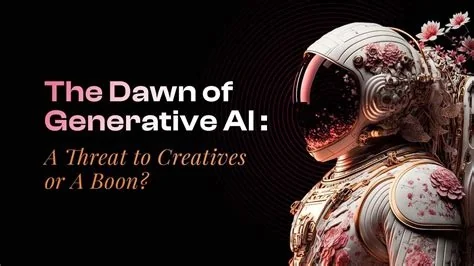
A recent industry survey shows that 90 percent of freelance illustrators feel threatened by AI‑generated artwork, fearing loss of commissions and unauthorized replication of their unique styles. The rapid rise of generative AI tools is prompting a coordinated lobbying effort in the UK to secure legal protections and preserve the creative economy.
Survey Findings on AI Impact
Illustrators’ Unease and Key Statistics
The survey asked freelance illustrators about their exposure to AI tools such as Midjourney, DALL‑E and Stable Diffusion. Nine‑in‑ten respondents reported feeling “uneasy” or “very uneasy” about AI‑generated images, citing concerns that their original styles could be copied without consent and that commissions might be replaced by automated outputs.
Broader data from the creative sector reveal similar trends:
- 58 percent of photographers reported losing work to generative AI, with average annual losses of £35,000 per photographer.
- One‑third of creative jobs have already been displaced by AI.
- 86 percent of authors say their earnings have declined because of AI‑generated text.
- Nearly 75 percent of musicians believe unregulated AI threatens their ability to earn a living.
Collectively, experts warn that without regulatory safeguards, generative AI could “hollow out” the UK’s multi‑billion‑pound photography sector and trigger a similar contraction across the broader creative economy, which supports more than 2.4 million jobs.
Legislative Lobbying Efforts
Leading creative‑industry bodies have convened in London to present their findings to policymakers, characterising unauthorised scraping of artists’ work for AI training as “the greatest act of theft in modern history.” They are calling for a suite of legal protections, including a new “Personality Right” that would grant creators control over the commercial use of their visual style and likeness.
Proposed CLEAR Framework
- C – Consent first: creators must give explicit permission before their work is used for training data.
- L – Licensing, not scraping: AI developers should obtain licences rather than harvesting publicly available images.
- E – Ethical use of training data: datasets must be curated to avoid infringing on copyrighted material.
- A – Accountability: mechanisms for redress and compensation when AI outputs replicate protected works.
- R – Regulation: a clear statutory regime that aligns AI development with human‑centred creative rights.
Economic and Cultural Implications
Data suggest that the impact of generative AI extends beyond individual earnings. Photographers have reported a 46 percent drop in the number of images shared online, indicating a retreat from public platforms to protect their work. Illustrators are similarly limiting portfolio exposure.
Economically, the displacement of creative work threatens to reduce entry‑level and mid‑career opportunities for emerging artists. The disparity between the size of the UK creative sector (over 2.4 million jobs) and the AI technology sector (approximately 86 000 jobs) underscores the risk that AI could concentrate wealth and employment in a narrow technical niche while hollowing out the broader cultural ecosystem.
Culturally, the loss of human‑generated art could diminish the diversity of visual expression that underpins the nation’s heritage, eroding the pool of creators who shape culture and inspire future generations.
Government Response and Next Steps
The UK government has indicated a willingness to engage on AI governance, but industry leaders argue that voluntary codes are insufficient. They are preparing a formal briefing to the Department for Digital, Culture, Media & Sport, urging adoption of the CLEAR framework and the establishment of a “Personality Right” within copyright law.
Outlook
If legislative measures are enacted, creators could regain control over how their work is used in AI training, potentially stabilising earnings and preserving the integrity of the creative industries. Without such safeguards, the trajectory points toward significant job loss, reduced income, and a contraction of the UK’s cultural output, reshaping the balance between technological innovation and human creativity.