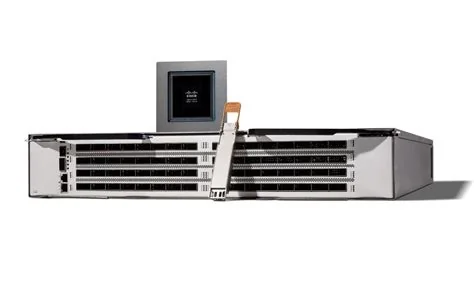
Cisco’s new G300 ASIC delivers 102.4 Tbps of switching capacity, positioning it as the backbone for AI‑driven data centers. Designed for the upcoming N9000 and 8000 platforms, the chip blends massive bandwidth with deterministic, programmable switching to keep GPUs fed and cut idle cycles. It also promises up to 70 % better energy efficiency thanks to full liquid cooling.
Why the G300 ASIC Matters for AI Workloads
The AI explosion has turned data movement into a critical bottleneck. By treating the network as an extension of compute, the G300 removes that choke point and lets modern accelerators operate at full throttle. You’ll notice smoother tensor shuffling and fewer stalls during large‑scale training runs.
Unmatched Bandwidth and GPU Integration
At 102.4 Tbps, the G300 provides more than enough fabric bandwidth for thousands of GPUs in a single rack. Its deterministic switching fabric ensures that each GPU receives data exactly when it’s needed, which Cisco claims can shave roughly 28 % off job‑completion times. Higher throughput means you can scale models faster without over‑provisioning uplinks.
Energy Efficiency Through Liquid Cooling
The N9000 and 8000 chassis are 100 % liquid‑cooled, a design that cuts cooling‑related power draw by nearly 70 % compared with traditional air‑cooled switches. This reduction translates into lower operating expenses and a tighter Power Usage Effectiveness (PUE) metric—critical for hyperscalers and sovereign clouds alike. Less heat, less waste, more compute per watt.
Key Benefits for Data Center Operators
- Scalable AI fabric: Supports gigawatt‑scale AI clusters with deterministic performance.
- Reduced TCO: Faster job completion and lower energy costs lower overall project spend.
- Simplified rack design: Liquid cooling eliminates bulky fans and reduces acoustic noise.
- Unified management: The refreshed Nexus One UI offers a single pane of glass for provisioning, monitoring, and security.
Implementation Considerations and Integration
Integrating the G300 into existing Cisco ecosystems is straightforward if you’re already using DNA Center or ACI. The ASIC is backward compatible with earlier Silicon One families, but mixed‑workload environments may stress the cooling system during traffic spikes. Planning for adequate liquid‑cooling capacity and monitoring bursty traffic patterns will help you avoid surprises.
What You Should Expect When Deploying the G300
Early adopters report that fabric stand‑up times drop from weeks to days thanks to the Nexus One management plane. You can expect a more predictable scaling curve as the network keeps pace with next‑generation GPUs that push beyond 1 TB/s memory bandwidth. Ultimately, the G300 aims to make the network a first‑class citizen in AI compute, delivering both performance and sustainability in one package.