
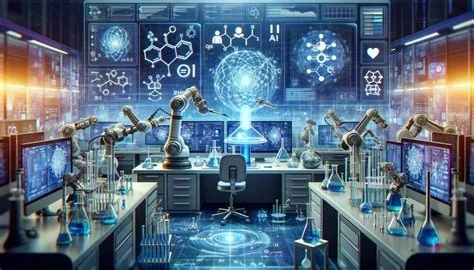
Berkeley Lab’s new AI‑driven Digital Twin for Chemical Science creates a live virtual replica of an APXPS experiment, letting the system suggest the next measurement in real time. The platform collapses weeks‑long data interpretation into minutes, giving you instant insight and accelerating material discovery.
How the Digital Twin Works
The system pairs the Advanced Light Source’s high‑resolution APXPS with a deep‑learning model trained on thousands of spectra. As the experiment runs, the AI predicts how changes in temperature, gas composition, or bias voltage will affect surface chemistry, then instantly recommends the optimal next step.
Real‑Time Experimentation Loop
Instead of a linear workflow—hypothesis, experiment, offline analysis, follow‑up—researchers now adjust parameters on the fly while the AI continuously learns and directs the experiment. This closed‑loop approach turns a static measurement into an interactive dialogue between scientist and instrument.
Practical Impact Across Research Areas
- Battery Development: Watch lithium‑ion intercalation in real time, enabling rapid optimization of electrode performance.
- Catalysis: Observe formation and desorption of intermediate species on nanoparticles, shortening the path from discovery to deployment.
- Materials Scaling: Reduce the need for repetitive, time‑intensive characterization when moving novel materials toward production.
First‑Hand Experiences
Dr. Maya Patel, a postdoctoral researcher, used the Digital Twin to study nickel‑based catalysts for CO₂ reduction. “When we loaded the sample, the AI suggested a subtle pressure ramp that revealed a transient carbonate phase we would have missed otherwise,” she said. “That saved us weeks of bench work and let us move straight to catalyst testing.”
Path Toward Autonomous Chemical Characterization
The AI doesn’t just analyze data—it decides what to measure next. By automating the decision‑making process, the platform paves the way for fully autonomous experiments that continuously refine themselves without manual intervention. If you’re looking to speed up material screening, this capability can dramatically cut down trial cycles.
Future Extensions
Berkeley Lab plans to expand the Digital Twin beyond APXPS to include infrared spectroscopy and electron microscopy. Seamless integration with additional techniques could make digital twins a standard feature in labs worldwide, democratizing rapid insight and slashing discovery timelines.
What This Means for You
For researchers, the new platform eliminates a major bottleneck in data interpretation, letting you focus on hypothesis generation and application. As AI integration becomes a baseline expectation, labs that adopt this technology will stay ahead in the race for faster, more reliable material breakthroughs.


