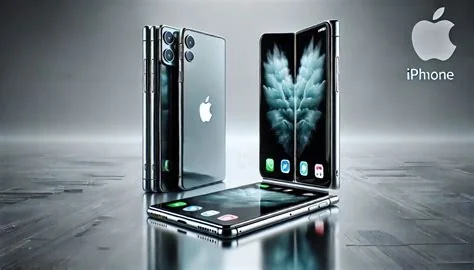
Apple’s first foldable iPhone, the iPhone Flip, combines a clamshell form factor with a record‑breaking 5,000 mAh battery, relocated side buttons, a two‑tone color palette, and a single Lightning/USB‑C port. The design aims to deliver all‑day endurance while challenging Samsung’s premium foldables and expanding Apple’s ecosystem into the foldable market.
Key Design Highlights
Clamshell “Sandwich” Hinge Architecture
The iPhone Flip uses a thin central hinge flanked by two display panels that fold inward, creating a compact clamshell shape. This “sandwich” construction protects moving parts and maintains a low profile, addressing durability concerns that have limited earlier foldable devices.
Relocated Physical Buttons
Traditional volume and mute controls are moved to the outer edges of each half when the device is opened. This placement ensures button accessibility regardless of which side faces up, preserving the tactile experience iPhone users expect.
Two‑Tone Color Options
Apple offers the foldable in a limited two‑tone palette, a departure from the broader color range of standard iPhones. The contrasting shades emphasize the device’s premium positioning and highlight its unique form factor.
Minimal Port Configuration
The iPhone Flip retains a single Lightning‑compatible (or future‑proofed USB‑C) port and relies on wireless charging. This streamlined approach aligns with Apple’s trend toward fewer physical interfaces while maintaining fast charging capabilities.
Battery Capacity and Performance
At over 5,000 mAh, the iPhone Flip houses the largest battery ever seen in an Apple‑branded device. The high capacity is designed to offset the power demands of dual displays, delivering all‑day usage without compromising the thin clamshell profile.
Market Impact and Competitive Landscape
Apple’s entry into the premium foldable segment could shift market dynamics. Samsung currently leads with its Z Flip and Z Fold series, while other manufacturers hold smaller shares. By integrating iOS, the App Store, and seamless connectivity with macOS and watchOS, the iPhone Flip may accelerate consumer adoption of foldable smartphones.
Expert Insights on Engineering Challenges
Industrial designer notes that moving side buttons to the outer edges “preserves ergonomics while protecting the hinge.” Hardware engineers highlight that the “sandwich” hinge likely combines a metal alloy core with polymer cushioning to achieve durability and a low‑profile thickness. They also caution that thermal management will be critical, as a larger battery generates more heat within a thin chassis.
Future Outlook for Apple’s Foldable Strategy
While Apple has not confirmed official specifications, the convergence of multiple design cues points to a clamshell‑style iPhone Flip slated for release alongside the next generation of iPhone Pro models. If the device meets performance and durability expectations, it could set a new benchmark for premium foldables and broaden Apple’s product ecosystem.