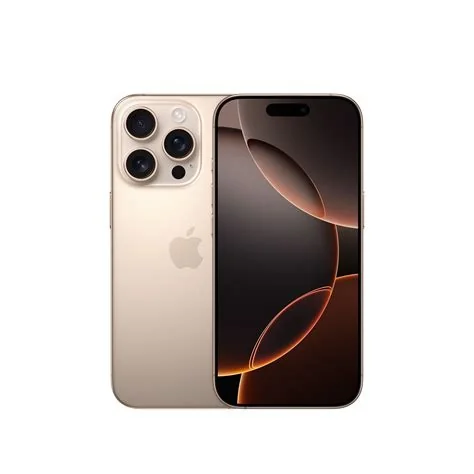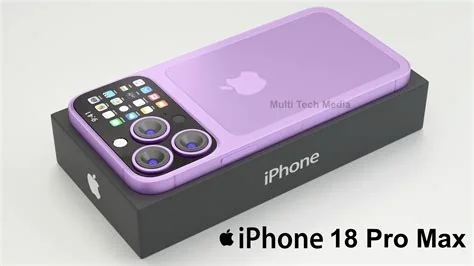
The iPhone 18 Pro Max introduces Apple’s first 2 nm A20 processor, delivering a major boost in speed and efficiency, while a larger battery extends real‑world usage. A new foldable form factor expands the lineup, and refined camera and display features enhance photography and screen real estate. These upgrades position the device as a premium flagship for power users.
Hardware Upgrades
The Pro Max model is powered by the A20 chip built on a 2 nm process, offering higher transistor density, lower power consumption, and faster clock speeds compared with the previous generation. Combined with a larger capacity battery, the device promises longer endurance despite the increased performance demands of advanced components.
Processor and Performance
- A20 2 nm processor: Significant performance uplift and improved power efficiency.
- Enhanced thermal management: Optimized design to handle higher workloads without overheating.
- Machine‑learning acceleration: Faster AI tasks such as real‑time image processing and AR experiences.
Battery Improvements
- Higher capacity: Extends daily usage even with power‑hungry features.
- Optimized charging: Supports faster wired and wireless charging rates.
Camera and Display Enhancements
The iPhone 18 Pro Max receives major camera upgrades, including larger sensors and improved optics for better low‑light performance. The front display adopts a cleaner design with a reduced Dynamic Island, freeing up additional screen space for content.
Camera System
- Upgraded main sensor: Higher resolution and larger pixel size for sharper images.
- Improved telephoto lens: Enhanced optical zoom and stabilization.
- Advanced computational photography: Faster HDR processing and AI‑driven scene optimization.
Display Refresh
- Smaller Dynamic Island: More usable screen area without sacrificing functionality.
- Higher brightness: Better visibility in bright environments.
Connectivity and Form Factor
All high‑end models retain comprehensive 5G support, ensuring fast mobile data speeds worldwide. The new foldable variant introduces a flexible hinge mechanism, allowing the device to transition between a compact phone and a larger tablet‑like display.
5G and Wireless Features
- Full‑band 5G compatibility: Seamless connectivity across global networks.
- Wi‑Fi 6E and Bluetooth 5.3: Faster wireless data transfer and lower latency.
Foldable Design
- Flexible hinge: Durable mechanism for repeated folding.
- Dual‑mode display: Standard phone size when folded, expanded screen when opened.
Release Strategy
Apple plans a staggered launch, debuting the iPhone 18 Pro, iPhone 18 Pro Max, and the foldable model later in the year, followed by the standard iPhone 18 in the subsequent months. This approach separates premium and entry‑level releases to maximize market coverage.
Market Impact
The 2 nm A20 chip sets a new performance benchmark for smartphones, potentially widening the gap between iOS and Android flagships. A larger battery and upgraded camera address long‑standing consumer demands, while the foldable iPhone could accelerate mainstream adoption of flexible devices.
Technical Perspective
From an engineering standpoint, moving to a 2 nm process presents challenges in lithography, yield management, and thermal design. Developers can expect new capabilities from the A20’s AI engine, but may need to adapt UI elements to accommodate the smaller Dynamic Island area.
Conclusion
The iPhone 18 Pro Max combines a groundbreaking 2 nm A20 processor, a larger battery, advanced camera hardware, and a pioneering foldable design. These innovations position Apple’s upcoming flagship as a leader in performance, versatility, and form factor, setting the stage for the next generation of premium smartphones.