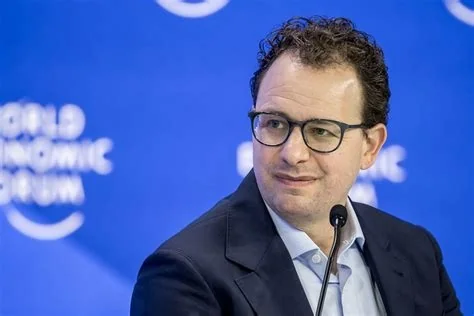
At the India AI Impact Summit, Anthropic CEO Dario Amodei declared that the company’s latest AI models could finally tackle diseases that have stumped humanity for centuries. He explained how advanced reasoning and drug‑design capabilities might shrink discovery timelines, but he also warned that the same power could be misused. You’ll want to watch both the promise and the pitfalls.
AI’s Potential to Cure Long‑Standing Ailments
Amodei said the next generation of Anthropic models can reason across complex biological pathways and generate novel drug candidates faster than traditional pipelines. By simulating molecular interactions at scale, the AI could cut years off the research cycle, turning what once took decades into months. Imagine a system that proposes viable therapies before human labs even start experiments. If the technology lives up to its hype, you could see cures for conditions that have resisted treatment for millennia.
How Generalized Reasoning Accelerates Discovery
The breakthrough hinges on generalized reasoning—the ability to apply learned knowledge to new, unseen problems. Instead of hand‑crafting each hypothesis, the AI drafts dozens of plausible compounds, ranks them for safety, and iterates instantly. This approach mirrors recent successes in protein‑folding but pushes further into full‑scale drug design.
Risks and Ethical Challenges
Amodei cautioned that the same engines could be weaponized, disrupt labor markets, or deepen existing inequities. Unchecked, AI‑driven drug pipelines might concentrate power in a handful of tech firms, raising concerns about data ownership, pricing, and equitable access. He urged governments and industry to act now, setting safeguards before the technology scales.
Key Threats to Watch
- Potential misuse for bioweapon development.
- Accelerated job displacement in biotech research.
- Biases embedded in training data that could skew therapeutic outcomes.
Anthropic’s Strategic Move in India
To anchor its ambitions, Anthropic announced a new office in Bengaluru and named Irena Ghose as managing director for India. The office aims to tap local talent and collaborate with Indian firms, including a partnership with Infosys to embed Anthropic models into enterprises and research labs. This expansion signals a commitment to grow its AI ecosystem in a high‑growth market.
Implications for Patients, Regulators, and the Workforce
For patients, a faster AI‑driven pipeline could finally bring attention to rare and neglected diseases. Regulators may need to craft AI‑centric approval pathways that balance speed with safety. Meanwhile, the biotech workforce will likely shift toward AI‑augmented research roles, demanding new skills in prompt engineering and model validation. You’ll see a reshaping of how cures are discovered, validated, and delivered.