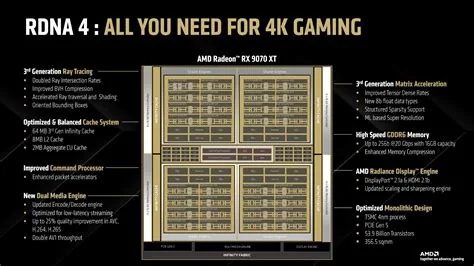
AMD’s open‑source graphics stack just got a boost: the LLVM backend now supports a new GFX1170 target that brings AI‑centric instructions and FP8/BF8 conversion to integrated GPUs. The changes let developers compile kernels that leverage matrix‑multiply ops and lower‑precision data types, translating into faster inference on upcoming APUs. If you’re targeting AI on AMD hardware, these tweaks could shave latency and cut power draw.
What’s New in the GFX1170 Target
Matrix‑Multiply Instructions
The update adds WMMA128b variants and introduces SWMMAC ops, giving the compiler direct access to wave‑level matrix multiply‑accumulate primitives. These instructions are designed to accelerate tensor‑style workloads without hand‑written assembly.
FP8 and BF8 Conversion Support
New conversion pathways let kernels switch between FP8, BF8, and higher‑precision formats on the fly. FP8 is especially popular for inference because it halves memory bandwidth while keeping enough accuracy for most models.
Legacy Instruction Removal
Several outdated ops—such as V_DOT2ACC_F32_F16, DX10_CLAMP, and the “amdgpu‑ieee” mode bits—have been stripped. Dropping these simplifies the compiler pipeline and removes unnecessary runtime checks.
Why It Matters for AI Workloads
By exposing matrix‑multiply primitives and low‑precision formats, the GFX1170 target equips AMD’s integrated graphics to act as first‑class AI accelerators. You’ll see measurable speed‑ups in ROCm‑based inference pipelines, and the reduced instruction set means tighter, more maintainable code.
Impact on Developers and the ROCm Ecosystem
From a software perspective, the LLVM changes enable the Radeon driver stack to emit the new instructions automatically. This translates into:
- Higher performance for AI kernels without manual assembly.
- Lower power consumption thanks to efficient FP8 handling.
- Simpler code paths as legacy modes disappear.
If you’re building ROCm applications, you can start probing the new ISA today by targeting the GFX1170 backend in your build configuration.
Next Steps for AMD and the Community
AMD hasn’t announced silicon that officially carries the GFX1170 label yet, but the public commits let the open‑source community experiment now. Driver teams should prepare scheduling and power‑management strategies for the added matrix units, while developers can begin testing AI kernels with the new FP8 and WMMA features.