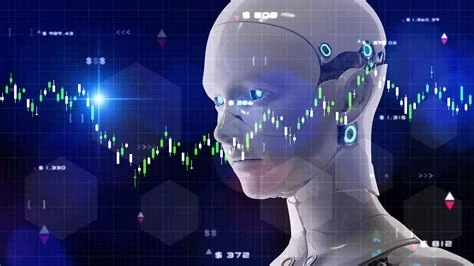
Artificial intelligence (AI) is revolutionizing the financial markets, transforming how you analyze data, manage risk, and execute trades. AI trading technology applies data analysis and automation to financial markets, enabling traders to make faster, more informed decisions. This technology has become a cornerstone of modern trading strategies, and it’s essential to understand its benefits and risks.
What is AI Trading Technology?
AI trading technology refers to the use of AI, machine learning, and advanced data analytics to assist or automate trading decisions. Unlike traditional rule-based systems, AI technology can learn from vast datasets, identify complex patterns, and adapt to changing market conditions in real-time. You can leverage AI systems to analyze price movements, trading volume, economic indicators, sentimental data, and even unstructured information such as news and social media.
How AI Trading Technology Works
AI algorithms can process millions of data points to identify trends, correlations, and potential trade setups. These systems can generate trading signals based on probabilities rather than emotions, helping traders reduce bias. For instance, AI can dynamically assess market volatility, optimize position sizing, and suggest stop-loss levels based on real-time conditions. This helps traders protect capital during uncertain market environments.
Risks and Limitations of AI Trading Technology
As AI systems become more autonomous, there’s a growing concern about their potential impact on market stability. Can AI systems really replace human judgment, or will they augment it? While AI can analyze vast amounts of data, it’s essential to consider the potential risks and limitations of relying solely on AI-driven decisions. You must approach AI trading technology with a critical perspective and understand its benefits and risks.
Real-World Applications of AI Trading Technology
- Global algorithmic trading firms are deploying AI execution systems to handle fragmented markets.
- Tradeweb, Virtu, Flow Traders, and others are investing in adaptive AI to enhance traditional analysis and provide data-driven insights.
- AI-driven financial systems have set trade conditions where specified trades are executed automatically.
Conclusion and Future Outlook
AI trading technology is here to stay, and its impact will only continue to grow. As you move forward, it’s essential to prioritize transparency, accountability, and regulatory frameworks that ensure the safe and responsible use of AI in financial markets. The use of AI in trading won’t replace human traders, but it will undoubtedly change the way they operate. They’re already using AI to analyze data, identify trends, and execute trades. And as AI technology continues to evolve, you can expect to see even more innovative applications in the financial markets.
By leveraging AI trading technology, you can gain a competitive edge and make more informed decisions. As AI continues to reshape the financial markets, traders and investors must adapt to this new reality. With the right approach, AI can revolutionize the way you trade and invest, enabling you to make more informed decisions and navigate complex markets with confidence.