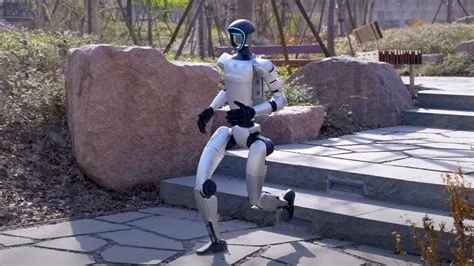
Unitree Robotics showcased its G1 full‑scale humanoid skiing down the snowy slopes of Changchun, demonstrating real‑time balance, perception, and locomotion on slippery terrain. The 1‑minute‑52‑second demo highlighted the robot’s ability to perform a rapid kip‑up and maintain stable descent, confirming its readiness for outdoor, unstructured environments. The performance also proved the effectiveness of its AI‑driven control system and suggests broader applications in disaster response, maintenance, and entertainment.
Technical Foundations of the G1 Humanoid
AI‑Powered Perception and Control
The G1 relies on an integrated sensor suite that streams data to an on‑board AI module. This module continuously adjusts joint torques to preserve balance on uneven or slippery surfaces, enabling rapid recovery from falls and precise maneuvering during high‑energy actions such as the kip‑up.
Modular ROS Architecture
Built on the Robot Operating System (ROS), the G1 offers a modular software stack that lets developers plug in custom motion‑planning algorithms. This open framework accelerates experimentation and supports rapid iteration of locomotion strategies for diverse environments.
China’s Robotics Landscape and Market Momentum
From R1 to G1: Accelerated Development
Unitree’s progression from the cost‑effective R1 model to the high‑performance G1 reflects a national push to scale AI‑driven robotics. Each generation incorporates faster processors, lighter actuators, and refined control loops, shortening the gap between laboratory prototypes and field‑ready machines.
Public Demonstrations Driving Adoption
High‑visibility events such as the Changchun ski showcase serve to shift public perception, positioning humanoid robots as practical tools rather than experimental curiosities. These demonstrations generate media buzz and stimulate interest from enterprises seeking automation solutions for challenging terrains.
Implications for Industry and Society
Outdoor Applications and Use Cases
- Disaster response: Ability to navigate debris‑filled, slippery zones.
- Infrastructure maintenance: Safe inspection of bridges, pipelines, and rooftops.
- Entertainment and events: Dynamic performances in outdoor venues.
Economic Impact and Ecosystem Growth
With a price point comparable to earlier models, the G1 makes advanced bipedal robotics accessible to midsized enterprises and research labs. Increased adoption is expected to boost demand for compatible sensors, software licenses, and third‑party development tools, fostering a vibrant ecosystem around humanoid platforms.
Future Outlook for Unitree G1
Upcoming Enhancements
Unitree plans to extend operational endurance, improve energy efficiency, and refine locomotion on varied terrains. Future iterations may also feature more expressive facial interfaces, enhancing human‑robot interaction for collaborative tasks.