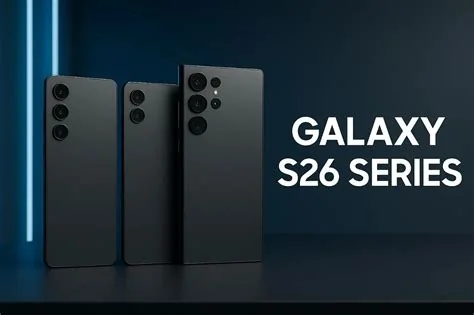
Samsung’s upcoming Galaxy S26 series launches on February 25, delivering three models—S26, S26 +, and S26 Ultra—each with upgraded displays, larger batteries, and the next‑gen Exynos 2600 or Snapdragon 8 Gen 3 chipset. Shipping begins in early March, and the Ultra introduces a hardware‑level privacy screen, positioning the lineup as Samsung’s most advanced flagship family yet.
Release Date and Shipping Timeline
The official unveiling is set for February 25, with pre‑orders opening shortly after. Shipments are scheduled for early March, and the first devices are expected to arrive around March 11, following Samsung’s traditional spring rollout for premium smartphones.
Design and Display Highlights
Galaxy S26
The base model features a 6.3‑inch FHD+ AMOLED display with a 120 Hz adaptive refresh rate. It is powered by a 4,300 mAh battery and runs on the upcoming Exynos 2600 (or Snapdragon 8 Gen 3 in the U.S.).
Galaxy S26 +
The S26 + upgrades to a 6.7‑inch QHD+ AMOLED panel, also at 120 Hz, and houses a 5,000 mAh battery. Design tweaks include a slightly larger camera bump to accommodate an enhanced sensor array.
Galaxy S26 Ultra
The flagship Ultra pushes the envelope with a 6.9‑inch QHD+ Dynamic AMOLED 2X display, a 5,200 mAh battery, and a per‑iscope telephoto lens offering 10× optical zoom. Its standout feature is a new privacy screen that narrows the viewing angle using a hardware‑level light‑modulating layer, protecting on‑screen content from shoulder‑surfing.
Performance and Software
All three models run Android 14 topped with Samsung’s One UI 6.0. The software brings deeper AI integration, enhanced multitasking, and refined customization options, while the chipset choices deliver improved efficiency and performance across the lineup.
Pricing Expectations
- Galaxy S26 – estimated starting price around $799
- Galaxy S26 + – estimated around $999
- Galaxy S26 Ultra – likely topping out near $1,299
Why the Galaxy S26 Matters
The series serves as Samsung’s testbed for cutting‑edge innovations that later filter down to the broader Galaxy ecosystem. The introduction of a hardware‑based privacy screen could set a new industry standard for visual data protection, while the modest battery upgrades address criticism of the previous generation’s rapid drain under sustained 120 Hz usage.
Market Position and Competition
With its launch, Samsung aims to compete directly against other premium flagships such as Apple’s iPhone 16 Pro, Google’s Pixel 9, and high‑end devices from Xiaomi and OnePlus. The privacy screen and refined battery capacity are positioned as differentiators in a crowded market where data security and endurance are increasingly decisive factors.
What to Watch at the Launch Event
The February 25 event will showcase live demos of the new display technology, the Ultra’s privacy screen, and the camera system’s capabilities. Viewers will also look for confirmation of the Exynos versus Snapdragon chipset split and any surprise software features that leverage One UI 6.0’s AI enhancements.