
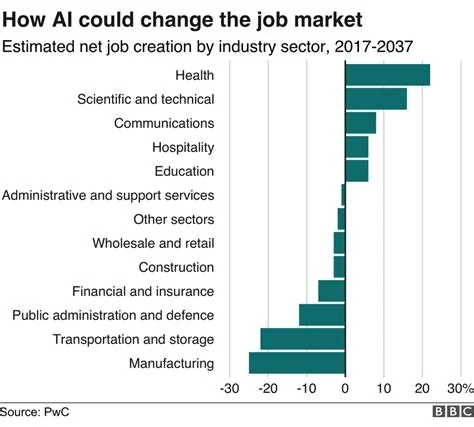
Artificial intelligence is reshaping labour markets worldwide, with Morgan Stanley reporting an 8% net job loss in the United Kingdom, a 7% decline in Japan, and a 4% drop in Germany, while the United States experienced a 2% net employment gain. The study highlights divergent regional outcomes as AI adoption accelerates across key industries.
AI Job Impact Overview
Net Employment Changes by Country
The analysis surveyed firms using AI for at least one year across consumer staples, retail, real estate, transport, healthcare equipment, and automotive sectors. Results show the steepest job reductions in the UK (8%), followed by Japan (7%) and Germany (4%). In contrast, US companies added jobs, achieving a 2% net increase.
Sector‑Specific Effects
Across the six examined sectors, AI-driven automation led many firms to eliminate or refrain from back‑filling roughly a quarter of positions in the UK, while US firms paired productivity gains with new hiring in AI‑focused roles such as AI agents and trainers.
Productivity Gains vs Employment
Productivity Improvements
British firms reported an average 11.5% rise in productivity attributable to AI, a figure comparable to gains observed in the United States. Despite these efficiency boosts, the UK’s productivity increase has not translated into net hiring, highlighting a disconnect between output and workforce growth.
Balancing Automation and Hiring
US companies demonstrated that AI can coexist with job creation when firms invest in emerging AI‑centric positions. This approach contrasts with the UK’s reliance on automation that primarily reduces headcount without offsetting hires.
Policy and Business Implications
Strategic Workforce Planning
Employers facing AI‑induced job cuts must develop reskilling programmes to transition staff into new AI‑related roles. Aligning automation strategies with workforce development can mitigate displacement risks and sustain long‑term productivity.
Regulatory Considerations
Policymakers need to address the divergent impacts of AI across economies, ensuring that regulatory frameworks support both technological advancement and labour market stability.
Future Outlook
Potential Trajectories
If current trends continue, the UK may see a widening gap between productivity gains and employment growth, while the US model suggests that coordinated hiring and automation can foster net job creation. Ongoing research will be essential to monitor whether these early patterns solidify into lasting equilibria between human labour and machine intelligence.


