
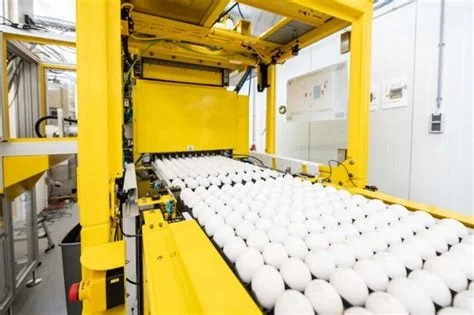
A new AI-driven imaging system from Hitachi Solutions Create can identify the sex of a chicken embryo inside the egg after just three days of incubation, achieving about 97% accuracy. The non‑destructive method uses low‑light photography and deep‑learning analysis, offering poultry producers a fast, humane way to separate male and female embryos before hatching.
How the AI‑Powered Imaging System Works
The technology combines three core components: low‑intensity illumination, high‑resolution imaging, and a deep‑learning model trained on a large collection of egg photographs. Light is projected through the incubating egg, revealing the developing vascular network. Enhanced images feed the AI, which detects subtle patterns linked to embryo sex.
Low‑Intensity Illumination and High‑Resolution Imaging
By using gentle light that does not harm the embryo, the system captures clear internal images without breaking the shell. High‑resolution cameras record the blood‑vessel layout, providing the visual data needed for accurate classification.
Deep‑Learning Model Trained on Thousands of Egg Images
The neural network was trained on roughly 82,000 labeled egg images, learning to associate specific vascular signatures with male or female embryos. After three days, the model correctly classifies about 97% of the samples, delivering reliable results for commercial use.
Why Early Egg Sex Determination Matters
Traditional hatcheries determine sex only after chicks emerge, requiring skilled workers and often leading to the culling of male chicks, which cannot lay eggs. Early sexing eliminates this practice, aligning production with animal‑welfare expectations and reducing unnecessary loss.
- Ethical advantage: eliminates routine male chick culling.
- Economic efficiency: saves feed, energy, and labor by focusing on female embryos.
- Operational predictability: improves hatch‑rate forecasts and inventory planning.
Impact on Precision Poultry Farming
The AI sexing system fits into a broader move toward data‑driven poultry management. By providing real‑time biological data, it enables farms to make informed decisions about incubation space, resource allocation, and market supply.
Integration with Smart‑Sensor Platforms
When combined with environmental sensors that monitor temperature, humidity, and feed intake, the sexing technology creates a continuous feedback loop. This integration supports automated adjustments that optimize bird health and productivity throughout the production cycle.
Industry Implications and Adoption Outlook
Regions with strict regulations against chick culling are likely early adopters, as the system meets high accuracy standards while maintaining humane practices. Wider commercial rollout could lower production costs, stabilize egg prices, and set new industry benchmarks for sustainability.
Challenges and Path to Commercial Scale
Scaling from laboratory to full‑scale hatcheries requires hardware integration with existing incubators, validation across diverse breeds, and robustness under varying lighting and temperature conditions. Ongoing collaborations with equipment manufacturers aim to address these hurdles and ensure regulatory compliance.
Conclusion
Hitachi’s AI‑driven egg‑sexing system offers a high‑accuracy, non‑invasive solution that could transform poultry production. By merging optical imaging with deep learning, it delivers ethical, economic, and operational benefits that align with the growing demand for responsible and efficient animal agriculture.


