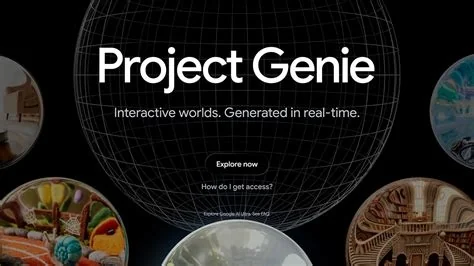
Google Project Genie is a browser‑based AI sandbox that turns a text prompt or single image into a fully interactive 3‑D environment in about 60 seconds. Powered by the Genie 3 world model, Nano Banana Pro accelerator, and Gemini multimodal model, it delivers real‑time physics, object behavior, and agent interaction without pre‑baked assets, available to Google AI Ultra subscribers.
How Project Genie Works
From Text Prompt to Interactive 3‑D Scene
Users enter a natural‑language description or upload a photo. Gemini interprets the input, converting it into scene specifications that Genie 3 can simulate. The system then renders the environment directly in the browser, allowing users to walk through, manipulate objects, or script actions that the world responds to instantly.
Real-Time World Simulation
Unlike traditional game engines that rely on pre‑designed geometry and scripted physics, Genie 3 learns rules from data and generates them on demand. This world model predicts object dynamics, physics, and agent behavior, enabling seamless updates as users interact with the scene.
Core Technologies Behind Project Genie
Genie 3 World Model
Genie 3 is a third‑generation world model that simulates dynamic environments by learning from large datasets. It eliminates the need for manual asset creation, allowing instant generation of complex scenes from simple prompts.
Nano Banana Pro Accelerator
The custom Nano Banana Pro hardware provides low‑latency, high‑throughput compute required to run Genie 3 inference in real time within a web browser, ensuring smooth interaction and rapid scene generation.
Gemini Multimodal Model
Gemini bridges natural language and visual generation. It translates user prompts into actionable scene specifications, orchestrating the flow from text to interactive simulation.
Use Cases and Benefits
Rapid Prototyping for Developers
Developers can create entire virtual environments from a single image, dramatically shortening the iteration cycle for level design, game concepts, or UI mockups.
Training AI Agents
Researchers can generate diverse, on‑demand training scenarios for autonomous agents, reducing the time and cost of building custom simulation datasets.
Creative Storytelling
Artists and storytellers can craft interactive narratives, virtual art installations, or personalized experiences that react to user input in real time, exploring endless variations without fixed pipelines.
Limitations and Access
Ultra Subscription Requirement
Project Genie is currently limited to Google AI Ultra subscribers, and each generated world consumes a portion of the user’s compute quota, restricting access to those with paid plans.
Generation Speed and Complexity
The 60‑second generation window caps scene complexity, meaning highly detailed environments may require multiple iterations or higher compute allocations.
Impact on the AI Landscape
Democratizing Real-Time Simulations
By delivering a world model that updates instantly based on user actions, Project Genie blurs the line between static content generation and dynamic, AI‑driven environments, paving the way for more immersive VR experiences and interactive training tools.
Future Directions
As Google expands access beyond the Ultra tier and refines the underlying models, the platform could become a foundational tool for developers, researchers, and creators seeking scalable, real‑time AI‑generated worlds.