
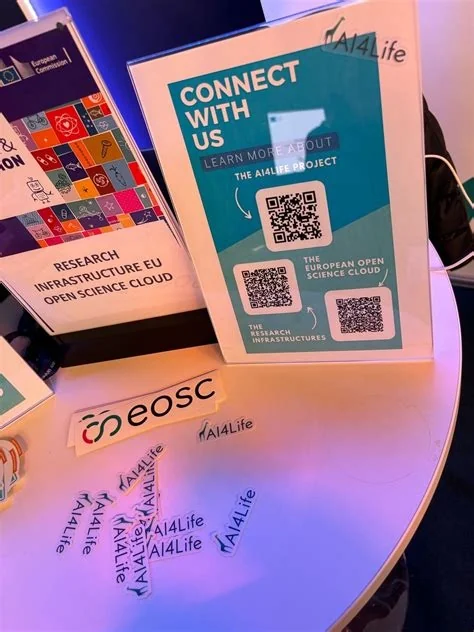
The European Commission has awarded the AI4Life project the highest possible evaluation, recognizing it as a benchmark for open‑source artificial intelligence in life‑science research. AI4Life delivers ready‑to‑use deep‑learning tools that enable biologists to apply advanced image analysis without specialized coding, accelerating discovery and supporting the EU’s push for trustworthy, accessible AI.
AI4Life Project Overview
AI4Life is a pan‑European initiative that aims to lower technical barriers for deep‑learning applications in microscopy and other imaging‑intensive biological studies. Coordinated through a collaborative research infrastructure, the project focuses on creating reusable AI resources that can be adopted by non‑specialist researchers across the continent.
Key Open‑Source Components
BioImage Model Zoo
The BioImage Model Zoo is a crowd‑sourced repository of pre‑trained deep‑learning models for microscopy image analysis. It offers interoperable, standardized models that dramatically reduce the time required to deploy high‑quality AI tools in laboratory practice.
BioEngine Platform
BioEngine provides a suite of services that manage data according to FAIR principles (Findable, Accessible, Interoperable, Reusable). Together with the Model Zoo, it forms a sustainable ecosystem that encourages broader scientific adoption of AI without demanding advanced computational expertise.
Why the EU Top Score Matters
The top‑level rating underscores the EU’s strategic emphasis on open science and open‑source software as drivers of competitiveness. By rewarding projects that prioritize openness and accessibility, the Commission signals that future funding will likely favor collaborative, standards‑based initiatives that can be scaled across research domains.
Challenges in Europe’s AI Landscape
- Regulatory and operational risks: Autonomous AI actions create new compliance requirements and demand continuous traceability.
- Fragmented standards: Diverse data formats and model interfaces hinder large‑scale deployment despite open‑source efforts.
- Talent and investment gaps: Coordinated policy support is needed to keep Europe competitive with other leading AI regions.
Implications for Researchers and Industry
For life‑science researchers, the Model Zoo offers a plug‑and‑play solution: a biologist can download a pre‑trained model, apply it to microscopy data, and obtain results without writing custom code. This democratization of AI can accelerate pipelines from drug screening to cellular phenotyping.
Industry players can build on community‑validated models to shorten development cycles and lower integration costs. The FAIR‑aligned data services also simplify compliance with emerging EU data‑governance rules, easing market entry for AI‑enhanced products.
Future Outlook
AI4Life’s recognition marks a milestone for open‑source AI in Europe, demonstrating how collaborative, standards‑driven projects can translate cutting‑edge research into usable tools for the scientific community. Ongoing attention to regulatory and operational challenges will be essential to scale more autonomous AI systems safely and maintain Europe’s competitive edge.


