
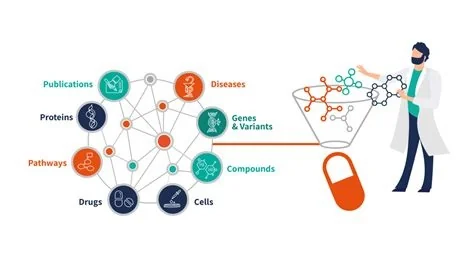
Advanced artificial‑intelligence systems are now mining clinical‑trial data, genomic records and immunology literature to pinpoint immune‑inflammatory biomarkers linked to drug‑resistant epilepsy (DRE). By flagging these targets, AI enables rapid identification of repurposed anti‑inflammatory drugs and novel biologics, offering a precision‑medicine pathway that could shorten the trial‑and‑error cycle for patients. This approach also supports personalized treatment plans based on each patient’s molecular profile.
AI‑Driven Target Discovery in Epilepsy
Data Integration and Biomarker Mining
Modern AI pipelines combine thousands of patient records, gene‑expression datasets and cytokine profiles to uncover patterns that traditional analysis often misses. The algorithms prioritize biomarkers that show consistent elevation in refractory seizure cohorts, such as specific interleukins, chemokines and microglial activation markers.
Protein‑Structure Prediction and Candidate Screening
Deep‑learning models predict the three‑dimensional structures of immune‑related proteins implicated in seizure propagation. By virtually docking millions of small molecules and biologics against these structures, AI ranks candidates that can modulate the identified pathways with high affinity and favorable safety signals.
From Prediction to Therapeutic Delivery
Engineered Probiotic Platforms for Gut‑Brain Modulation
Emerging synthetic‑biology platforms use engineered probiotic strains to produce therapeutic antibodies or peptides directly within the gut. This oral delivery strategy targets the gut‑brain axis, a critical conduit for immune signaling that influences neuronal excitability in DRE.
Clinical Impact and Patient Benefits
- Precision Stratification: Patients can be grouped by molecular immune signatures rather than seizure frequency alone.
- Accelerated Trials: AI‑driven screening reduces candidate selection time from years to months.
- Reduced Trial‑and‑Error: Clinicians receive actionable drug recommendations tailored to each biomarker profile.
Transparency, Trust, and Regulatory Considerations
Regulators require clear documentation of AI decision pathways. Hybrid models that blend mechanistic simulations with machine‑learning predictions provide the interpretability needed for safety assessments and approval processes. Ongoing validation studies focus on reproducibility, bias mitigation and real‑world effectiveness.
Future Outlook for AI in Drug‑Resistant Epilepsy
As AI architectures continue to evolve, their ability to integrate multi‑omics data, predict protein interactions and support innovative delivery mechanisms will expand. In the coming months, preclinical validation of AI‑identified targets will determine whether these discoveries can transition into early‑phase clinical trials, potentially establishing a new standard of care for patients with drug‑resistant epilepsy.


