
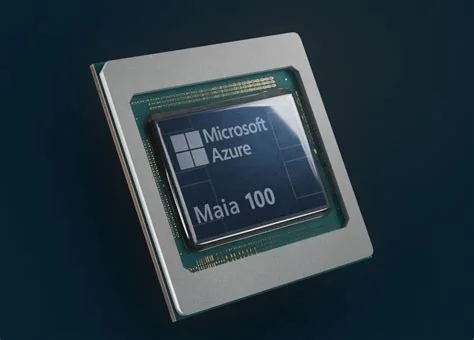
Microsoft’s new Maia 200 AI accelerator is a purpose‑built ASIC designed to boost inference workloads on Azure. It promises up to three times the throughput of the Maia 100 while using less power per operation, delivering lower cost‑per‑token and faster response times for large language‑model and image‑generation services across the cloud.
What Is the Maia 200 AI Accelerator?
The Maia 200 is a custom silicon chip optimized for generative‑AI inference, including transformer‑based language models and diffusion‑based image generators. It is offered as a high‑speed inference engine that can be provisioned on Azure’s AI‑optimized virtual machines.
Key Performance Claims
- Up to 3× higher inference throughput compared with the Maia 100 on comparable workloads.
- Improved power efficiency, delivering lower energy consumption per token.
- Reduced cost‑per‑token for customers running large‑scale generative‑AI services.
How Maia 200 Fits Into Microsoft’s AI Silicon Strategy
Microsoft’s custom silicon roadmap began with the Cobalt processor, progressed to the Maia 100, and now advances to the Maia 200. Each generation narrows the gap between cloud infrastructure and AI model requirements, giving Azure a dedicated inference layer that complements existing GPU resources.
From Cobalt to Maia 100 to Maia 200
- Cobalt – Microsoft’s first Arm‑based server chip, establishing in‑house design expertise.
- Maia 100 – The initial AI‑first accelerator that offloaded latency‑sensitive inference tasks from GPUs.
- Maia 200 – The latest generation, targeting foundation‑model workloads with threefold performance gains.
Impact on Azure and Enterprise AI Deployments
The Maia 200’s performance and efficiency can reshape the economics of AI inference on Azure. Enterprises can achieve lower latency, reduced energy costs, and more predictable performance for services such as large language‑model APIs and image‑generation platforms.
Cost, Latency, and Energy Efficiency
- Lower latency enables real‑time responses for end‑user applications.
- Energy savings translate into reduced operational expenses for large‑scale deployments.
- Predictable pricing helps organizations plan AI workloads without relying solely on GPU pricing models.
Availability and Future Roadmap
Microsoft plans to roll out the Maia 200 to Azure customers through AI‑optimized VM instances in the upcoming quarter, with broader regional availability later in the year. The roadmap includes future generations of Maia chips that will address both inference and training workloads.
Bottom Line
The Maia 200 accelerator marks Microsoft’s most ambitious custom AI hardware effort to date, delivering up to three times the inference speed of its predecessor while lowering operational costs. By integrating this chip into Azure, Microsoft strengthens its vertically integrated AI stack and offers enterprises a compelling alternative to traditional GPU‑only solutions.


