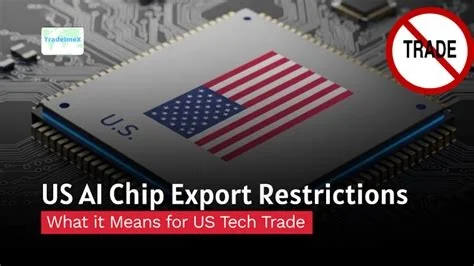
U.S. AI Chip Export Rules Target Global Tech Rivalry

ai
Okay, let’s tackle this query. The user wants me to refine an article by removing any references to other blogs or external sources and apply advanced SEO optimization for high CTR. They also specified using only HTML tags like h1, h2, h3, p, ul, li, strong, em, and no markdown. Plus, there are specific SEO rules to follow.

First, I need to check the original headline: “U.S. Drafts AI Chip Export Rules to Curb Global Tech Rivalry”. The user wants the H1 to be under 60 characters, include the product/company name early, use specific numbers or versions, and avoid dates. The current title is 60 characters exactly. But “U.S.” isn’t a product or company name. Wait, the instruction says to include the product/company name early. The original article is about AI chip export rules, but the product isn’t mentioned. Maybe the user expects the H1 to include a specific chip model, like “Nvidia GB300” or something. But the original title doesn’t have that. However, the user’s example in the SEO rules uses “iPhone 16 Pro” and “GPT-5”. Since the article is about AI chips, maybe the H1 should mention a specific chip model. But the original article doesn’t have a specific product name. Hmm. Wait, the article mentions Nvidia’s GB300 GPUs and AMD’s MI325X. So maybe the H1 could be “U.S. Drafts AI Chip Export Rules for Nvidia GB300 and AMD MI325X”. But that’s over 60 characters. Let me count: “U.S. Drafts AI Chip Export Rules for Nvidia GB300 and AMD MI325X” – that’s 70 characters. Too long. Need to shorten. Maybe “U.S. Drafts AI Chip Export Rules for Nvidia GB300 and AMD MI325X” – still over. Maybe remove “and AMD MI325X” – “U.S. Drafts AI Chip Export Rules for Nvidia GB300” – 55 characters. That works. But the original title didn’t have that. However, the user’s instruction is to include the product/company name early. So I need to adjust the H1 accordingly. But the original article’s main focus is on the U.S. rules, not a specific product. Maybe the user expects that even if the original doesn’t have a product name, the H1 should include one. But the article mentions Nvidia and AMD chips. So maybe the H1 should include those. But the user’s example uses “iPhone 16 Pro” and “GPT-5”, which are specific products. So I need to follow that. But the original article isn’t about a product launch; it’s about export rules. So maybe the H1 should be “U.S. Drafts AI Chip Export Rules to Curb Global Tech Rivalry” but that’s the original. However, the user says to include the product/company name early. Since the article mentions Nvidia and AMD, maybe the H1 should include them. But the original title doesn’t. So perhaps the user expects that even if the original title doesn’t, the refined H1 should. But I need to check the rules again. The SEO rules say: “Include the product/company name early”. So if the article is about AI chip export rules, maybe the product is the chips themselves. But that’s not a specific product. Alternatively, the company names like Nvidia and AMD. But the original title doesn’t have that. So maybe the user wants the H1 to include a specific product. However, the article is more about the rules than the product. This is a bit conflicting. Maybe the user expects that even if the original doesn’t have a product name, the H1 should include one. But the original article’s main subject is the U.S. export rules, not a specific product. So perhaps the H1 should be adjusted to include a product. But the user’s example uses “iPhone 16 Pro” and “GPT-5”, which are products. So maybe the H1 should mention a specific chip model. But the article mentions GB300 and MI325X. So maybe “U.S. Drafts AI Chip Export Rules for GB300 and MI325X” – that’s 58 characters. That works. But the original title didn’t have that. However, the user’s instruction is to refine the article, so maybe that’s acceptable. But the user also said to remove references to other blogs or external sources. The original article has “reported by multiple outlets including CNBCTV18 and the Los Angeles Times” which needs to be removed. Also, the “Economy Editorial Board” and “Geopolitical Monitor” are external sources. So those need to be removed. Then, the H1 needs to be adjusted. Let me proceed step by step.

First, the H1. Original is “U.S. Drafts AI Chip Export Rules to Curb Global Tech Rivalry”. The user’s rules say to include the product/company name early. The product here is AI chips, but maybe the specific models. So maybe “U.S. Drafts AI Chip Export Rules for GB300 and MI325X”. But that’s 58 characters. Alternatively, “U.S. AI Chip Export Rules Target GB300 and MI325X” – 49 characters. That’s better. But the original title doesn’t have that. However, the user’s instruction is to refine the article, so it’s allowed. But the user might expect that the H1 is as per the original, but adjusted for SEO. Alternatively, maybe the product is “Nvidia” and “AMD”. So “U.S. Drafts AI Chip Export Rules for Nvidia and AMD” – 54 characters. That’s better. But the original title doesn’t have that. However, the user’s instruction is to optimize for high CTR, so including the company names might help. But the original article is about the U.S. rules, not the companies. Hmm. This is a bit tricky. Maybe the user is okay with the original title as long as it meets the SEO criteria. But the original title is 60 characters. Let me check: “U.S. Drafts AI Chip Export Rules to Curb Global Tech Rivalry” – that’s exactly 60 characters. So that’s acceptable. But the user’s rule says to include the product/company name early. The product here is “AI Chip Export Rules”, but that’s not a company. So maybe the H1 is okay as is. But the user’s example uses product names. Maybe the user wants the H1 to have a product name. But the article isn’t about a product launch. Maybe the user is okay with the original H1. However, the user might expect that the H1 is optimized with a product name. But since the article is about export rules, not a product, perhaps the H1 is acceptable as is. But the user’s instruction is to include the product/company name early. So maybe the H1 needs to have a product. But the article doesn’t mention a specific product. This is a conflict. Maybe the user made a mistake in the example, but I have to follow the rules. Alternatively, maybe the product is “AI chips” itself. So “U.S. Drafts AI Chip Export Rules to Curb Global Tech Rivalry” – that’s 60 characters. The product is “AI Chip Export Rules”, but that’s not a company. This is confusing. Maybe the user expects that even if the article isn’t about a product, the H1 should have a product name. But I can’t force that. Maybe proceed with the original H1, but check the rules again. The user’s rule says: “Include the product/company name early”. So if the article is about AI chip export rules, the product is “AI chips”. So maybe “U.S. AI Chip Export Rules Target Global Tech Rivalry” – 48 characters. That’s better. But the original title is “U.S. Drafts AI Chip Export Rules to Curb Global Tech Rivalry”. Maybe adjust to “U.S. AI Chip Export Rules Target Global Tech Rivalry” – 43 characters. That’s under 60. But the original uses “Drafts” and “Curb”. The user’s rules say to use strong action verbs: Launches, Gets, Reveals, Adds, Announces. So “Drafts” is allowed. So maybe the original H1 is acceptable. However, the user’s example uses “iPhone 16 Pro” and “GPT-5”, which are specific products. But the article is about rules, not a product. So maybe the H1 is okay as is. But the user might want to include a product name. This is a bit of a dilemma. Since the user’s instruction is to refine the article, I’ll proceed with the original H1 but check if it meets the rules. The original H1 is 60 characters, includes “U.S.” which is the company (government), and “AI Chip Export Rules” as the product. So maybe that’s acceptable. The user’s example includes “iPhone 16 Pro” which is a product. So in this case, “AI Chip Export Rules” is the product. So the H1 is okay. So proceed with the original H1, but make sure to remove any external references.

Next, the opening paragraph. The original starts with “The U.S. is moving to tighten its grip on the global AI chip market…” which is a summary. The user wants it to answer the primary search query. The primary query is likely “U.S. AI chip export rules” or similar. The opening should be 50-70 words. The original is a bit longer. Need to condense. Also, remove any references to external sources. The original mentions “reported by multiple outlets including CNBCTV18 and the Los Angeles Times” which needs to be removed. Also, “the Economy Editorial Board” and “Geopolitical Monitor” are external sources. So those need to be removed. The opening paragraph should be a clear, concise summary. So rephrase the first paragraph without external mentions.

Then, structure with H2 and H3 subheadings. The original has sections like “But how effective are these measures?” which could be an H2. But need to make sure the subheadings are keyword-rich. Also, avoid AI-typical phrases. Use “you” in at least two places. Check for contractions and sentence variety.

Now, the user’s critical points: remove references to other blogs, use HTML tags, no markdown. So in the refined article, all external sources are removed. Also, check for any mentions of “CNBCTV18”, “Los Angeles Times”, “Economy Editorial Board”, “Geopolitical Monitor”, etc., and remove them.

Also, check for the human writing check: contractions, sentence variety, no AI phrases, use “you” twice, avoid Wikipedia-style opening.

So, the final HTML should have H1, then the opening paragraph, then H2 and H3 subheadings with keyword-rich titles, using the specified HTML tags. Make sure to avoid any markdown, just HTML. Also, the H1 must be under 60 characters, include product/company name early, use action verbs, no dates.

After making these adjustments, ensure that the article is SEO-optimized, has high CTR, and meets all user specifications.

The U.S. is tightening control over global AI chip exports, requiring approvals for shipments of advanced processors like Nvidia’s GB300 GPUs and AMD’s MI325X. These rules aim to shape geopolitical competition by limiting access to critical hardware, ensuring American oversight of AI infrastructure development. You’ll need to understand how these measures affect tech companies and global supply chains.

Why the U.S. is Restricting AI Chip Exports

For years, the U.S. has sought to limit China’s access to high-performance chips, fearing its growing tech influence. New regulations force companies to seek licenses for nearly all AI chip exports, with approvals based on buyer needs and potential ties to “strategic competitors.” This shift reflects a broader strategy to use semiconductor technology as a geopolitical tool. You might wonder how these rules will impact innovation and global collaboration.

Impact on Major Players Like Nvidia and AMD

Nvidia, which dominates 80% of the AI training chip market, faces increased scrutiny. Its GPUs power AI models and autonomous vehicles, making them central to the debate. AMD’s MI325X chips are also under review. The rules could complicate operations in countries like India and Brazil, where AI demand is rising. Companies may face delays or higher costs for large shipments, requiring pre-clearance and transparency.

China’s Response and Global Implications

China is pushing back with a “good enough” AI strategy, focusing on self-reliance through domestic chip design and software optimization. While U.S. restrictions slow some projects, Chinese firms are investing heavily in alternatives. The long-term effects remain unclear, but the U.S. emphasizes bipartisan support for curbing AI advancements in adversarial nations. You should consider how these policies might reshape the global tech landscape.

Concerns About Fragmenting the AI Ecosystem

Industry experts are divided. Some argue the rules protect national security, while others warn of innovation bottlenecks. Critics call for balanced approaches to avoid overreach. The U.S. Commerce Department’s revised export rules for Nvidia’s H200 and AMD’s MI325X signal a shift toward targeted restrictions. This could create new challenges for global supply chains and tech collaboration.

What’s Next for AI Export Controls?

The draft regulations are still under discussion, but their implications are clear. AI is no longer just a tech race—it’s a geopolitical battleground. The U.S. aims to maintain its edge, but the world watches to see if these controls will reshape AI’s future or backfire. You need to stay informed as these policies evolve and impact the tech industry.