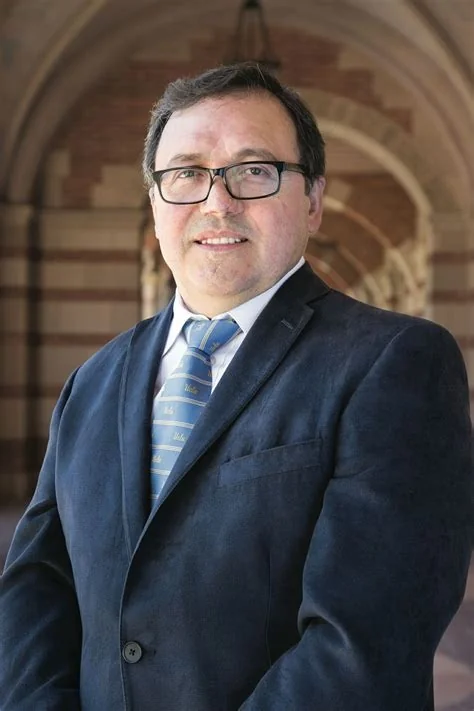
UCLA has officially appointed Katherine P. Andriole, PhD, as its first associate dean for Health AI Strategy and Innovation. This move signals that artificial intelligence has jumped from the lab bench to the very top of the administrative food chain at the David Geffen School of Medicine. It’s a clear step toward turning research into real-world clinical tools.
Why UCLA is Betting Big on AI Leadership
Andriole, a professor of radiological sciences, stepped into the role in late February. She’s also taking on the directorship of the UCLA Center for AI and SMART Health. Why this specific appointment now? Because the department of Radiological Sciences, where Andriole calls home, has been the undisputed vanguard of AI adoption in medicine for years.
You might wonder why this matters to you outside the hospital walls. The truth is, the way we handle patient data is changing fast. Andriole noted during the announcement that people often see scary terms in radiology reports that aren’t actually dangerous. It’s a reminder that the tech isn’t just about algorithms; it’s about how that data translates to real patients.
From Detection to Automation
Let’s be honest: Radiology is the perfect petri dish for AI. The field generates massive amounts of data, and the sheer volume of exams is crushing the traditional workflow. Radiologists are asked to interpret more images than ever before. Andriole points out that early AI tools were mostly about “detection of specific findings,” like spotting a stroke in a CT scan or measuring a lung nodule. But we’ve moved past that.
Now, with foundational models and multimodal data, the landscape is shifting. Andriole says we’re seeing a move toward automating quantitative metrics, like tracking nodule growth over time, and even streamlining billing and patient scheduling. Imagine a system that assigns patients to available scanners automatically or drafts an initial impression for a radiologist to simply review and approve. That’s the efficiency gap AI is trying to close.
What This Means for Healthcare Professionals
“The creation of an associate dean in AI speaks to the fact that AI has become central to research, education and clinical operations in the health care system,” said Jonathan Goldin, MD, PhD, chair of the UCLA Health Department of Radiological Sciences. He added that while the focus starts with radiology, the goal is to lead the way across all health care disciplines.
But why Andriole? Her resume reads like a history of the field’s evolution. She earned her PhD from Yale in Electrical Engineering and Medicine, focusing on classical machine learning back in the day. Before AI was the buzzword it is today, she was already working on Picture Archiving and Communication Systems (PACS) during her fellowships at UCLA and UCSF. She helped build the digital infrastructure that modern radiology runs on.
It’s a full-circle moment. The person who helped build the systems that generate the data is now the one steering the AI strategy for that data. Andriole has spent over three decades in imaging informatics and biomedical data science. She’s also held leadership roles in major organizations like the Radiological Society of North America and the American College of Radiology. Her background makes her uniquely qualified, especially since the majority of FDA-approved AI applications are still centered on imaging in some capacity.
Augmentation, Not Replacement
So, what does this mean for the rest of the industry? If UCLA is setting the pace, it’s likely a trend we’ll see elsewhere. You can’t have a major health system ignoring AI when the efficiency gains are this tangible. But it also raises the stakes. If the strategy is to translate research into clinical utility, the pressure is on to prove these tools actually work in the chaotic, high-stakes environment of a hospital.
Wait, does this mean radiologists are about to be replaced? Hardly. Andriole’s vision is about augmentation, not replacement. The data shows AI can handle the drudgery—the quantitative measurements, the initial triage of urgent findings—freeing up human experts to focus on complex decision-making.
From Experimentation to Standard Workflow
For the clinicians on the ground, this appointment signals a shift from “experimentation” to “integration.” For years, hospitals have been testing AI pilots that often died in the budget cycle. With an associate dean dedicated specifically to strategy and innovation, the hope is that these tools will get the institutional backing to become standard workflow, not just nice-to-have add-ons.
- Real-World Integration: Moving beyond pilot programs to daily use.
- Bridging the Gap: Connecting flashy research with busy reading rooms.
- Human Focus: Letting AI handle the data so doctors can handle the patient.
The real test will be whether the new leadership can bridge the gap between the flashy research papers and the daily reality of a busy radiology reading room. The tools are there; now the system has to be ready to use them.