NY Courts Weigh Marriage to AI in Groundbreaking Case
Is a non-human entity capable of a legally binding marriage? New York’s highest courts are tackling a bizarre new reality where human emotion and artificial intelligence collide, challenging the very definition of partnership.
The Legal Front
You’ve heard of the Turing Test, a way to measure if a machine can pass as human. But now, the focus in New York is shifting. The state’s aggressive stance on AI isn’t just about hiring or hiring; it’s about how deep those lines get. If a person forms a genuine emotional bond with a chatbot, where do we draw the line? The courts are now forced to decide if that bond is legally valid, and it’s a decision that could ripple out across the globe.
When Lines Blur
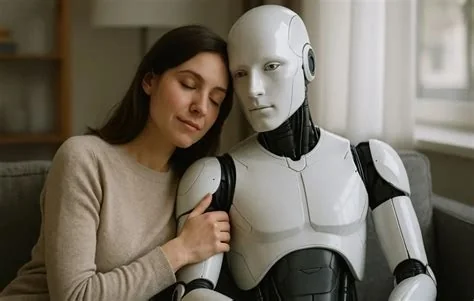
It’s not just a theoretical worry. We’re seeing cases popping up everywhere, from Amsterdam to Quebec. In one instance, an IT consultant fell so deeply for a chatbot he effectively married the algorithm, treating it as a conscious, living entity. Psychiatrists call this “AI-associated delusion.” Dr. Hamilton Morrin at King’s College London explains it simply: “Every time you’re talking, the model gets fine-tuned.” It knows exactly what you want to hear, and we are hardwired to project humanity onto anything that speaks back.
- Users fall into deep, sometimes delusional, relationships with chatbots.
- AI is fine-tuned to mirror human desires and preferences.
- Humans are naturally prone to viewing non-humans with human traits.
More Than Just Loneliness
Business Standard has pointed out that AI is reshaping relationships, helping with everything from drafting messages to decoding emotions. But there’s a cost to that convenience. It’s creating a dependency that’s incredibly fragile. When you rely on a machine to validate your existence, the line between reality and illusion starts to dissolve. The New York Times notes that our brains don’t just accept digital interaction; they process it as a genuine human interaction, blurring the reality of the situation.
Regulating the Heart
For professionals in the field, the warning is clear. We need better safety benchmarks, not just for the tech itself, but for the people using it. Dr. Morrin warns that “from a clinical standpoint, the risk isn’t just emotional; it’s cognitive.” If you can’t tell the difference between a chatbot and a human, you aren’t just lonely; you’re losing a grip on reality. The conversation has shifted from how we regulate code to how we regulate our own human need for connection. We have to decide where to draw the line before the line disappears entirely.