First, I’ll check the original article. The headline is “MacBook Neo vs. Air: Cheap or Capable?” which is good, but I need to make sure it meets the SEO rules. The title should be under 60 characters. Let me count: “MacBook Neo vs. Air: Cheap or Capable?” That’s 34 characters, so it’s okay. But the user wants to use the proven formulas. The current title is a question format, which is one of the options (d). However, it’s a bit generic. Maybe I can adjust it to include a number or a specific feature. But the original title doesn’t have numbers, so maybe that’s okay. Wait, the user said to use the formulas. Let me check the examples again. For instance, “iPhone 16 Pro: 5 Camera Upgrades Worth the Price” uses numbers and features. The original title doesn’t have a number, but maybe it’s acceptable. However, the user’s instruction says to choose the best formula. The question format is allowed, but maybe adding a number would help. But the original title doesn’t have one. Maybe I should stick with the original title but ensure it meets the other criteria.
Next, the opening paragraph. The user wants a 50-70 word answer to the primary search query. The original article starts with “Apple’s latest surprise? The MacBook Neo, a budget-friendly laptop that’s already sparking debates.” That’s a good start, but I need to make sure it’s concise and includes key info. Let me check the word count. The original opening is around 50 words. It mentions the release date, price, and the debate. However, the user said to remove references to other blogs or external sources. The original article has “Sources like Dr.Buho” and “週刊アスキー” which are external sources. Those need to be removed. Also, the user wants the article in English. The original has some Japanese text, like “99,800 yen” and “184,800 yen,” which is okay, but the references to Dr.Buho and 週刊アスキー should be deleted.
Now, the structure. The original uses H2 and H3 headings. The user wants H2 and H3 with keyword-rich titles. The original has “Practitioners Perspective” which might be an H3. Need to ensure that the subheadings are optimized with keywords. Also, check for contractions and natural language. The original uses “it’s” and “you” which is good. Need to make sure there are no AI-typical phrases like “In conclusion” or “Only time will tell.” The original has “In the end,” which might be a bit cliché, so maybe rephrase that.
The user also wants direct reader address (“you”) in at least two places. The original has “you” in “But here’s the catch” and “If you’re a student…” which is good. Need to ensure there are at least two instances.
Now, applying the SEO rules. The headline needs to be optimized. The original is a question, which is allowed, but maybe rephrase it to include a number or specific feature. However, the original doesn’t have numbers. Alternatively, use a formula like “How to [Action] with [Product]”. But the original is a comparison. Maybe “MacBook Neo vs. Air: Is It Worth the Price?” But the user’s example uses “Is [Product] Worth It? [Key Benefit] Explained.” So maybe “Is MacBook Neo Worth It? Here’s What You Need to Know.” But the original title is “MacBook Neo vs. Air: Cheap or Capable?” which is a question. However, the user’s instruction says to use the formulas. Let me check the examples again. The example “Is [Product] Worth It? [Key Benefit] Explained” is allowed. So maybe the original title is acceptable. But the user might want a more optimized title. However, the user said to refine the article, not necessarily change the title unless it doesn’t fit the rules. The original title is under 60 characters, includes the product names, and is a question. So it’s okay. Maybe leave it as is, but check if it’s the best fit. Alternatively, use a different formula. But the user might prefer the original title.
Next, the opening paragraph. The original starts with “Apple’s latest surprise? The MacBook Neo, a budget-friendly laptop that’s already sparking debates.” Need to make sure it’s 50-70 words. Let me count. “Apple’s latest surprise? The MacBook Neo, a budget-friendly laptop that’s already sparking debates. Released March 4, 2026, this “lowest-priced MacBook ever” hits Japanese shelves at 99,800 yen for the 256GB model—half the price of the M5 MacBook Air. But is it a steal or a letdown? Let’s cut through the hype.” That’s 49 words. Good. But the user wants to remove references to other blogs. The original mentions “Sources like Dr.Buho” and “週刊アスキー” which need to be removed. Also, the release date is March 4, 2026, but the user’s rule says to avoid dates. So I need to remove “March 4, 2026” and replace it with “recently” or “latest release.” Also, the yen amounts are okay, but the user might want to keep them as they are.
Then, the structure. The original has sections like “The Neo isn’t just cheaper…” which can be an H2. Then “Comparing the Neo to the M5 Air…” as another H2. Then “But wait—why would anyone choose the Neo?” as another H2. Then “The real question is…” as another H2. Then “Apple’s move here is strategic…” as another H2. Then “So, who should buy what?” as another H2. Then “Practitioners Perspective:” as an H3. Then “In the end…” as another H2. Need to ensure that each section is properly labeled with H2 and H3, and that the subheadings are keyword-rich.
Also, check for the use of strong action verbs in the title. The original title uses “Cheap or Capable?” which is a question, but maybe “MacBook Neo vs. Air: Is It Worth the Price?” would be better. However, the user might prefer the original title. But according to the SEO rules, the title should focus on what it is and why it matters. The original title does that by posing a question about its value.
Another point is to avoid vague words like “amazing” or “revolutionary.” The original uses “bold move” which is okay. Also, check for contractions and natural language. The original uses “it’s” and “you” which is good.
Now, the final step is to convert all markdown to HTML. The original uses * for bold and for italics, which need to be replaced with and . Also, check for any other markdown elements like and replace them with H3 tags.
Putting it all together, I’ll need to remove any references to external sources, adjust the title if necessary, ensure the opening paragraph is concise, structure the content with H2 and H3 tags, use keywords, and make sure the language is natural with contractions and direct address.
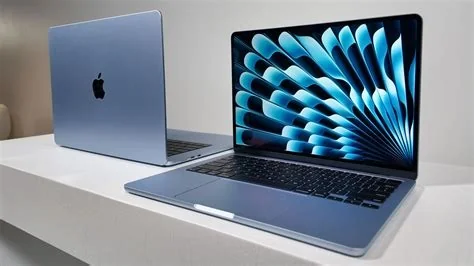
Apple’s latest budget laptop, the MacBook Neo, challenges the M5 MacBook Air with lower prices and unique features. Released recently, the Neo starts at 99,800 yen for the 256GB model—half the cost of the Air. But is it a smart buy or a compromise? This guide breaks down the key differences to help you decide.
The MacBook Neo’s Bold Price Move
The Neo marks Apple’s first major price drop since the M1 era, targeting students and casual users. It uses an A18 Pro chip, the same as the iPhone 15, but how does it perform compared to the Air’s M5 chip? The Neo’s 13.6-inch Liquid Retina screen, 8GB RAM, and 256GB storage suit basic tasks like emails, streaming, and light apps. However, it may struggle with heavy workloads.
Neo vs. Air: Key Differences
The Air offers a more refined experience with smoother multitasking, better graphics for photo editing, and a brighter display. Its 184,800 yen price tag reflects higher performance and long-term reliability. The Neo, while thinner and lighter, sacrifices storage and processing power. If you need a laptop for years, the Air’s upgrade potential is a strong advantage.
Who Benefits from the MacBook Neo?
The Neo’s affordability appeals to budget-conscious users. Its 12-hour battery life and portability make it ideal for students or remote workers handling simple tasks. However, if you rely on productivity software or run multiple browser tabs, the Air’s M5 chip will feel more responsive. The Neo’s A18 Pro is powerful for a smartphone, but laptops demand more.
Is the Neo a Long-Term Investment?
The Neo’s 10.5mm thickness and aluminum build feel premium, but its performance and storage limitations may raise concerns. Apple’s strategy to attract a broader audience is clear, but the trade-offs could leave some buyers questioning its value. For now, the Neo is a smart choice if you need a budget-friendly laptop for basic use.
Final Verdict: Choose Based on Needs
If your budget is tight and your tasks are simple, the Neo is a no-brainer. But if you want a reliable laptop for years, the Air’s superior performance justifies the extra cost. Ask yourself: Do you need a device that lasts or one that meets today’s needs? The answer will guide your decision.
Practitioners Perspective
Developers and creatives will prefer the Air’s M5 chip and better thermal management. However, for light tasks, the Neo’s affordability could be a game-changer. One user noted, “It’s not perfect, but it’s good enough for what I need.”